
What happened
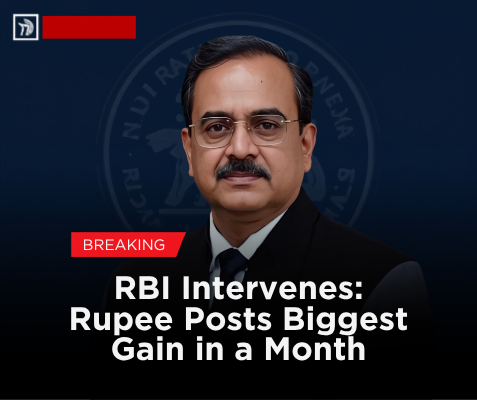
The Indian rupee logged its sharpest single-day advance in more than a month on Monday, as a large Reserve Bank of India intervention combined with a sudden slide in crude oil prices to trigger a wave of dollar selling. The currency strengthened by as much as 0.8 percent against the US dollar, touching 95.78, its best level since mid-June, before settling close to 95.9 by the end of trading.
Traders tracking the central bank’s activity said the RBI began selling dollars once the rupee was trading near 96.15 to the dollar, and that the scale of the intervention was unusually large for a single session. Estimates of the day’s dollar sales ranged between roughly 1.5 billion and 3 billion dollars, according to bankers who said the central bank was active in both the spot market and the non-deliverable forward market. Alongside outright sales, the RBI also ran buy-sell swaps that pulled down forward premiums, with the one-year implied interest rate easing by about 10 basis points.
The rupee’s rebound came on a day when several tailwinds converged. Brent crude tumbled by around 4 to 9 percent during Asian trading hours after the United States signalled a pause in strikes on Iran, easing fears of a prolonged supply disruption through the Gulf. A softer US dollar index added further support. Market participants said the RBI’s timing, stepping in just as those other factors were already lifting the currency, made Monday’s move unusually forceful, tripping stop-loss orders on investors who had bet on continued rupee weakness.
Background
The rupee has had a difficult month. Renewed US-Iran tensions had pushed international oil prices sharply higher through much of July, stoking concern about India’s import bill given the country’s heavy reliance on crude purchases from overseas. At one point last week the currency came close to breaching the 97-per-dollar mark for the first time, a level analysts had flagged as a psychological and technical pressure point.
Despite Monday’s bounce, the rupee remains one of the weaker performers among Asian currencies for the month as a whole, ranked second-worst by some trading desks. That has kept the central bank engaged, with officials describing a strategy of leaning against one-directional moves rather than defending any single exchange-rate level outright.
Official response
In an interview published in The Hindu BusinessLine on Monday, RBI Governor Sanjay Malhotra said the central bank’s recent push to draw in foreign currency has gathered pace, with banks mobilising close to 32 billion dollars, up from about 20 billion dollars in mid-July. Most of that inflow has come through the foreign currency non-resident deposit scheme the RBI unveiled in June, he said, with a further roughly 7 billion dollars arriving as foreign portfolio investment into debt securities following recent tax changes. Malhotra added that the central bank had not seen evidence that a significant share of these deposits simply represented existing funds being rebooked into the new scheme, suggesting the inflows reflect genuinely fresh capital.
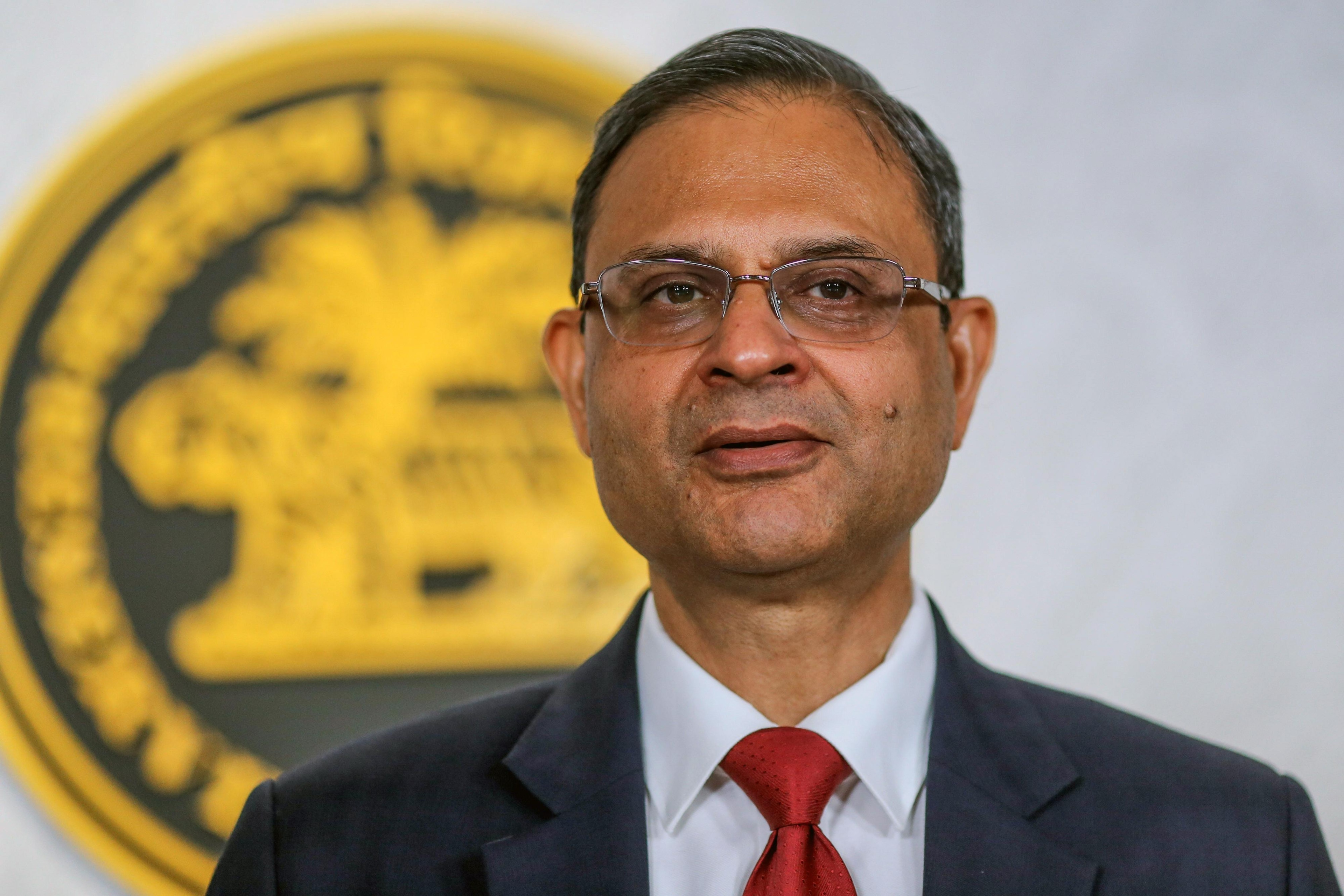 Photo: Bloomberg
Market reaction
HDFC Securities foreign exchange analyst Dilip Parmar said interventions carried out on days when other factors already favour the currency tend to have an outsized effect, since the central bank’s dollar sales compound gains rather than working against the tide. That dynamic played out clearly on Monday, traders said, as the initial move below the 96.14-96.16 range quickly cascaded into a sharper drop toward 95.80 within minutes, as leveraged dollar positions were unwound.
Government bond yields also eased in sympathy with the currency move, with the benchmark 10-year yield settling five basis points lower at 6.77 percent. Traders noted that the yield on the benchmark bond has now softened by about 26 basis points since the start of the current financial year.
 Photo credit: image via news wire coverage of the story
What’s next
Heading into Tuesday, the rupee is expected to open flat to slightly firmer, holding above the 96-per-dollar mark, according to currency desks. The near-term path is likely to hinge on whether the drop in oil prices sticks, how large the RBI’s next round of intervention turns out to be, and month-end dollar demand from importers, which traders say could cap further gains. Markets are also watching this week’s US Federal Reserve policy decision; futures pricing implies traders see only a modest chance of a rate move, with most expecting rates to be left unchanged.
For now, analysts said the RBI’s message is one of persistence: continued, calibrated intervention aimed at smoothing volatility rather than defending a fixed level, backed by a steady pipeline of foreign currency inflows the central bank hopes will build a larger buffer against future shocks.
Sources: RBI Governor Sanjay Malhotra, in an interview with The Hindu BusinessLine (published July 27, 2026); trader and banker accounts reported by Reuters and Bloomberg; Business Standard, Business Recorder.
Editorial note: Two of the three requested images could be confirmed as genuine wire/agency photographs within the time available (Bloomberg’s portrait of Governor Malhotra, and a news-wire image carried alongside republished coverage of this story). A dedicated, freely licensed photograph of Monday’s specific trading floor activity was not available, and the second body image’s further-use licensing should be confirmed with the original wire service before publication. The third image slot was left empty rather than filled with a placeholder or illustration.

Leave a Reply