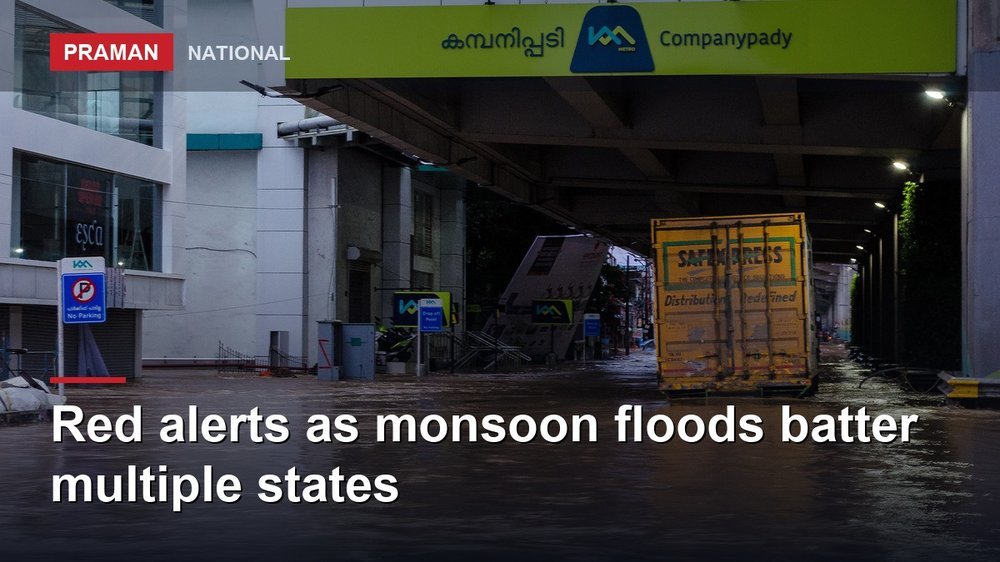
Heavy monsoon rain pounded large parts of India over the weekend, leaving several people dead, forcing mass evacuations and putting multiple states under the India Meteorological Department’s highest-level red alert. As of Sunday, August 2, the IMD warned that an active monsoon phase would persist for several more days, with the sharpest warnings for Kerala, Gujarat and the Himalayan belt, even as rivers ran above danger levels in the north and east.
State disaster-management authorities reported that hundreds of thousands of people across Kerala, Odisha and Assam had been affected by flooding, with relief camps set up and rescue teams deployed. The IMD’s warnings, issued through its regional centres and the SACHET early-warning system, urged residents in vulnerable areas to move to safety and avoid swollen rivers and landslide-prone slopes.
The human toll
Kerala was among the worst hit. State authorities said at least five people died on Saturday, August 1, in landslides that struck the hill districts of Idukki and Kottayam. The IMD placed eight districts — including Pathanamthitta, Idukki, Kozhikode, Wayanad and Kannur — under a red alert, and schools were shut in several places. In Pathanamthitta, families were evacuated by boat as the Pampa river rose.
In the northeast, Assam continued to reel from one of its worst flood seasons in years. State officials said about 1.92 lakh people remained affected across districts such as Sivasagar, Golaghat, Jorhat, Nagaon and Charaideo, with 379 villages submerged, thousands of hectares of farmland damaged and more than 13,000 people sheltering in relief camps. Authorities put the state’s cumulative flood toll for the season at over 80.
In Odisha, disaster officials reported that more than 8.3 lakh people across 20 districts had been affected, with over 1,300 houses damaged and large tracts of farmland under water. The scale of displacement across the three states underscored how widespread this spell of rain had become.
Taken together, the toll pointed to one of the more punishing stretches of the 2026 monsoon. Landslides in the hills, overflowing rivers on the plains and waterlogging in towns and cities have combined to strain relief systems in several states at once, with officials cautioning that figures for deaths, damaged homes and affected families were provisional and likely to rise as access to cut-off areas improved.
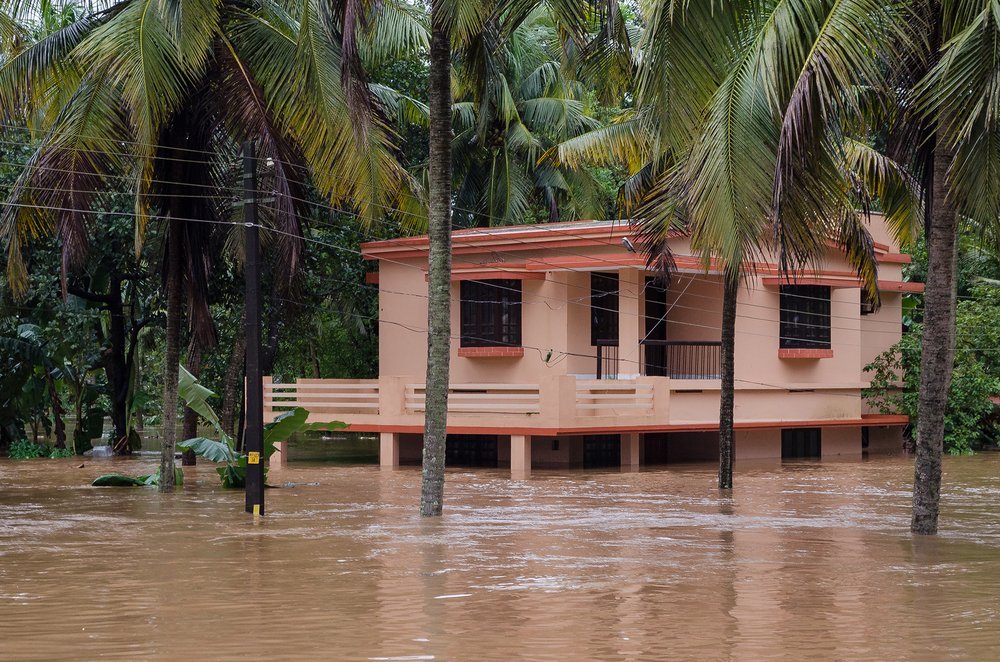
File photo (2018 Kerala floods) for representation. Photo: Wikimedia Commons / Dil Shad Roshan, CC BY-SA 4.0
What the IMD has forecast
The IMD said heavy to very heavy rainfall was likely at isolated places across Himachal Pradesh, the Jammu-Kashmir-Ladakh belt and Uttarakhand between August 2 and 7. It issued a red alert for Surat in Gujarat, driven by a weather system moving in from the Bay of Bengal, and flagged extremely heavy rain over parts of Madhya Maharashtra.
Under the IMD’s colour code, a red alert signals extremely heavy rainfall — often above 204.5 mm in a day at isolated spots — and calls on authorities to “take action,” while orange and yellow alerts indicate progressively lower, though still significant, risk. Orange and yellow warnings were in force across a broad swathe of the north, east and northeast, covering states from Punjab, Haryana and Uttar Pradesh to Bihar, Odisha and the sub-Himalayan region. The department cautioned that the rain could trigger flash floods, landslides, waterlogging and disruption to road and rail links in hilly terrain.
Rivers, dams and evacuations
Swollen rivers and dam discharges compounded the danger. In Himachal Pradesh, authorities warned people to stay away from the Beas after releases from the Pandoh dam touched around 36,000 cusecs, and more than 150 roads were closed by landslides and slippery conditions. In Uttarakhand, the Alaknanda rose above its warning level at Rudraprayag, prompting officials to order evacuations from vulnerable riverbank stretches.
In Odisha, the Hirakud dam on the Mahanadi was releasing water through 22 gates, and districts including Cuttack, Puri, Khurda, Kendrapada and Jagatsinghpur were placed on high alert. In Gujarat, where Surat and Valsad saw intense downpours, the state emergency operations centre deployed response teams; three people were rescued from the Auranga river in Valsad, and officials said 1,451 of some 1,540 flooded roads had been reopened. A cloudburst was also reported in Kishtwar in Jammu and Kashmir, while Andhra Pradesh issued warnings as the Godavari rose, placing the East and West Godavari districts on alert.
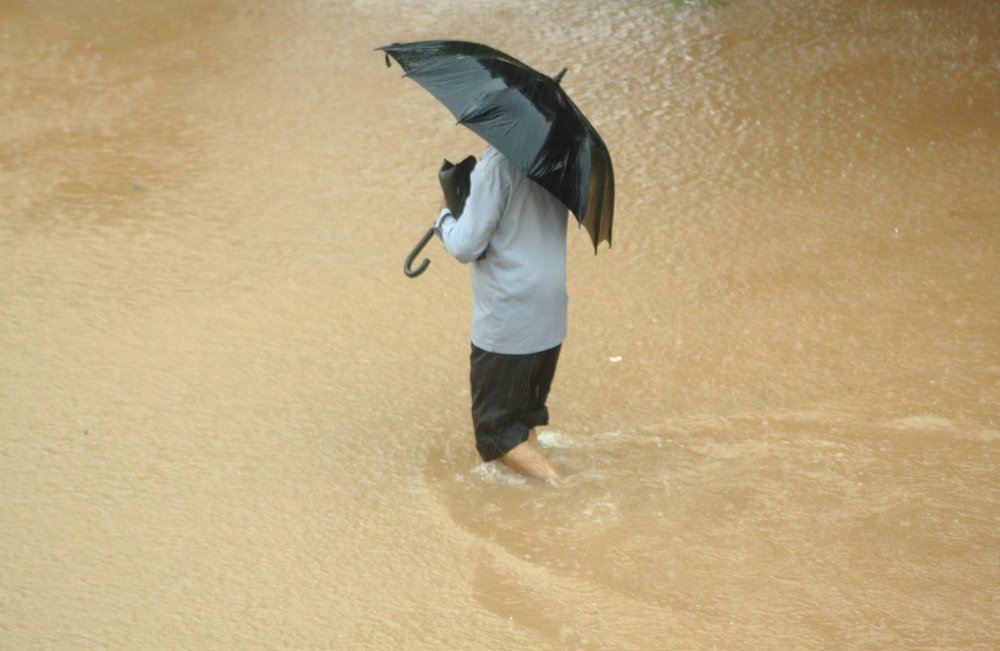
File photo (monsoon flooding, Ambala) for representation. Photo: Wikimedia Commons / Harsh Mangal, CC BY-SA 2.0
Relief and what comes next
Across the affected states, disaster-response forces, local administrations and volunteers worked to move people to relief camps, restore blocked roads and issue river-level warnings. The IMD’s advice remained consistent: heed official alerts, avoid non-essential travel in high-risk zones, and stay clear of rivers, culverts and low-lying areas during heavy spells.
With the department forecasting more intense rain in the coming days, officials indicated that alert levels would be revised as systems moved across the country. For now, the combination of saturated ground, high river levels and repeated heavy downpours means the risk of further flooding and landslides remains elevated — particularly in the hill states and along the west coast — until the current monsoon surge eases.
Sources (editorial reference): India Meteorological Department (IMD) weather warnings and colour-coded alerts, August 2, 2026; state disaster-management authorities of Kerala, Assam, Odisha, Gujarat, Himachal Pradesh, Uttarakhand and Andhra Pradesh (casualty, displacement and river/dam figures as reported by officials). Casualty and “affected” numbers reflect state authorities’ statements and may be revised. Body images are representative file photos from earlier Indian floods (2018 Kerala; 2010 Ambala), used illustratively — not photographs of the current flooding.
Leave a Reply