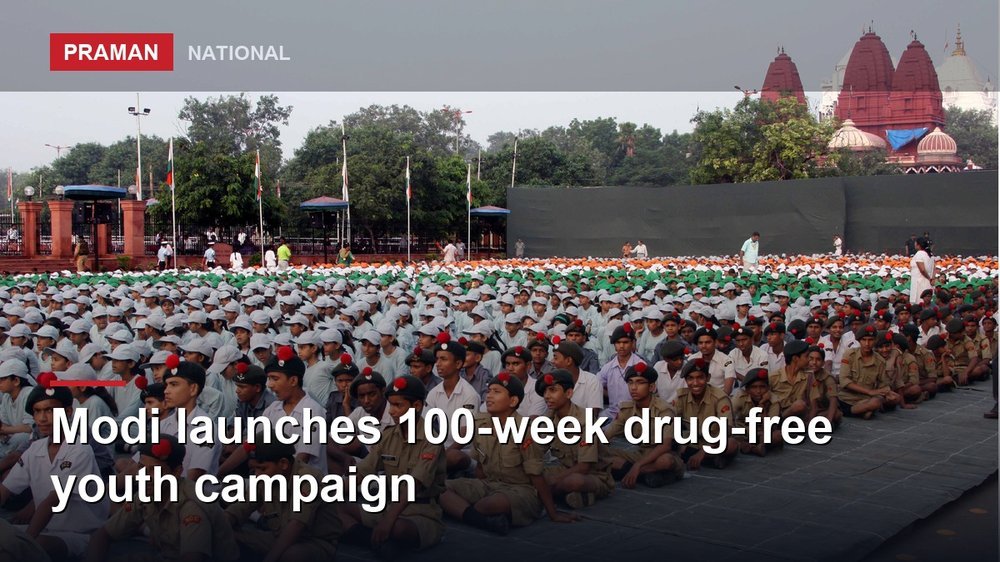
Prime Minister Narendra Modi on Sunday, August 2, launched the ‘Nasha Mukt Yuva for Viksit Bharat Sankalp Abhiyan’, a 100-week national campaign to push young Indians away from drugs and substance abuse and towards what he described as a fit, focused and self-confident generation. Addressing the country through video conferencing, the Prime Minister said the effort would run week after week for nearly two years, anchored in mass public participation.
According to the Prime Minister’s Office, more than one crore young citizens joined the launch from over 28,000 locations across the country, making it one of the largest youth-focused virtual events of the year. Governors, chief ministers, volunteers of the MY Bharat and National Service Scheme networks, and representatives of schools, colleges, universities, youth clubs and non-governmental organisations took part, alongside more than 125 spiritual and social organisations.
A 100-week, Sunday-by-Sunday campaign
At the heart of the initiative is a simple, repeating rhythm: an activity every Sunday for the next 100 weeks. The Prime Minister framed the roadmap around that cadence, saying the coming 100 Sundays would become “100 strong steps” towards a fully drug-free India. Each week is to feature a mix of sports events, walkathons, yoga and meditation sessions, cultural programmes, street plays, art competitions, discussion forums and awareness drives, organised locally so that participation is spread across cities, towns and villages rather than concentrated in a few centres.
The government has cast the campaign in its now-familiar ‘Jan Bhagidari’, or public participation, mould — the idea that a social goal is more durable when citizens drive it than when it is delivered top-down. During the launch, young people across the country collectively took a Nasha Mukti pledge, committing to stay free of substance abuse and to encourage others to do the same. Officials said the weekly structure was designed to keep momentum going long after the launch-day enthusiasm faded, turning a one-day event into a sustained routine.
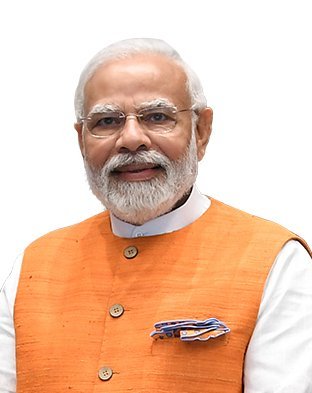
File photo. Photo: Government of India / Wikimedia Commons, GODL-India
Who is powering the campaign
The launch drew in a wide spread of the government’s youth and social machinery. Alongside governors and chief ministers, the event connected volunteers of MY Bharat — the government’s youth-engagement platform — and the National Service Scheme, whose networks reach thousands of colleges and schools. More than 125 spiritual and social organisations lent their support, a nod to the influence such bodies carry with young followers in many parts of the country.
The government has folded this backing into what it calls a shared commitment against addiction, and cast the youth themselves as the primary carriers of the message rather than passive recipients of it. By spreading ownership across campuses, community groups and faith-based organisations, officials hope the campaign will reach beyond the audiences that formal government messaging usually touches, and take root in everyday community life.
Youth at the centre
Much of the Prime Minister’s address was directed at the young themselves. He described India’s youth as the country’s “Amrit generation” — the cohort whose energy, imagination and talent, he argued, will decide whether the nation meets its development goals by 2047, the centenary of independence. Keeping that generation healthy, he said, was not only a personal matter but a national one, urging young people to stay physically and mentally fit and to steer clear of habits that could derail their potential. “Young people should always stay away from drugs and embrace a healthy lifestyle,” he said.
The campaign’s messaging leans on the argument that addiction weakens not just individuals but families and, by extension, the country’s collective strength. By enlisting students, campus volunteers and youth clubs as the primary carriers of the message, the government is betting that peer-to-peer persuasion will land more effectively than official warnings alone. The involvement of the NSS and MY Bharat networks, both linked to the Ministry of Youth Affairs and Sports, gives the campaign a ready-made organisational spine on thousands of campuses.
Support, rehabilitation and the road ahead
Beyond awareness, the initiative points to the support side of the problem. The Prime Minister spoke of the role of yoga and meditation in building mental resilience, of modern rehabilitation facilities for those seeking to recover, and of open communication within families as a first line of defence. The message was that prevention, treatment and social support need to work together rather than in isolation.
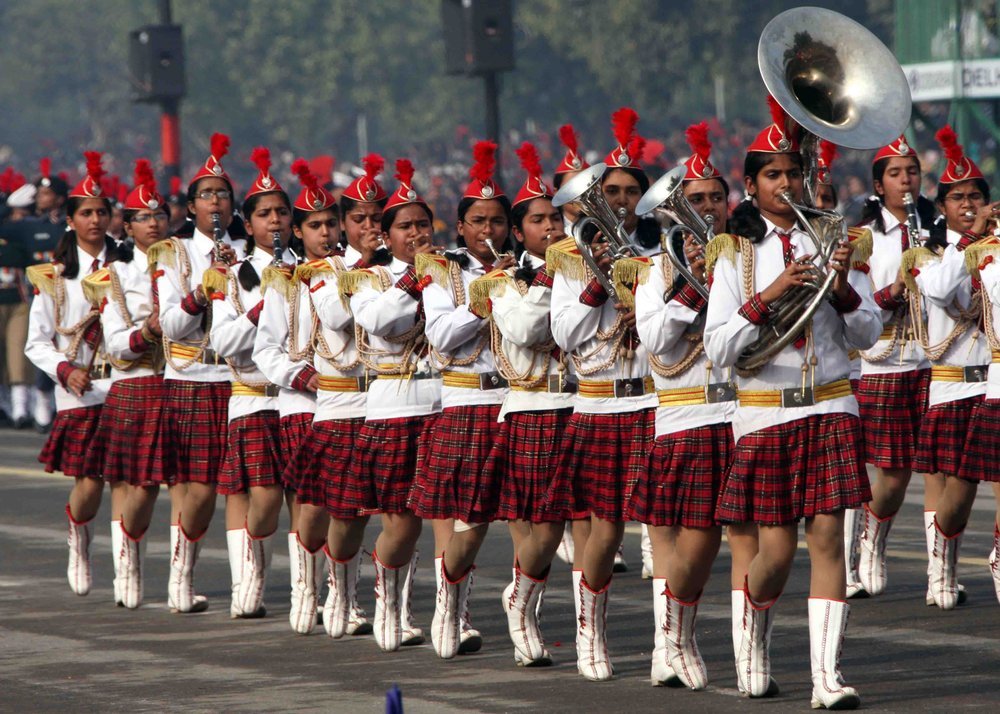
Representative file photo. Photo: Ministry of Defence / Wikimedia Commons, GODL-India
The launch builds on the government’s earlier ‘Nasha Mukt Bharat’ work but sharpens the focus on the young and stretches the timeline to a structured 100 weeks. Whether the campaign changes behaviour at scale will depend on how consistently the weekly activities are carried out on the ground, and on whether the enthusiasm of the launch translates into steady local participation over the long haul.
For now, the government has set out an ambitious, clearly timed framework and put its youth networks at the centre of it. With activities scheduled every Sunday through to 2028, the abhiyan’s success will be measured less by its opening-day numbers than by what the country’s classrooms, campuses and community grounds look like week after week in the months to come.
Sources (editorial reference): Prime Minister’s Office (PMO) and Press Information Bureau (PIB) announcements on the launch of the ‘Nasha Mukt Yuva for Viksit Bharat Sankalp Abhiyan’, August 2, 2026; as reported by the government broadcaster (NewsOnAir/Akashvani) and other outlets covering the event. Primary source is the PMO/PIB. Images are official/file photographs used representatively: the PM’s official portrait (2022) and NCC cadets at national parades (2010–2011) — not photographs of this event.
Leave a Reply