
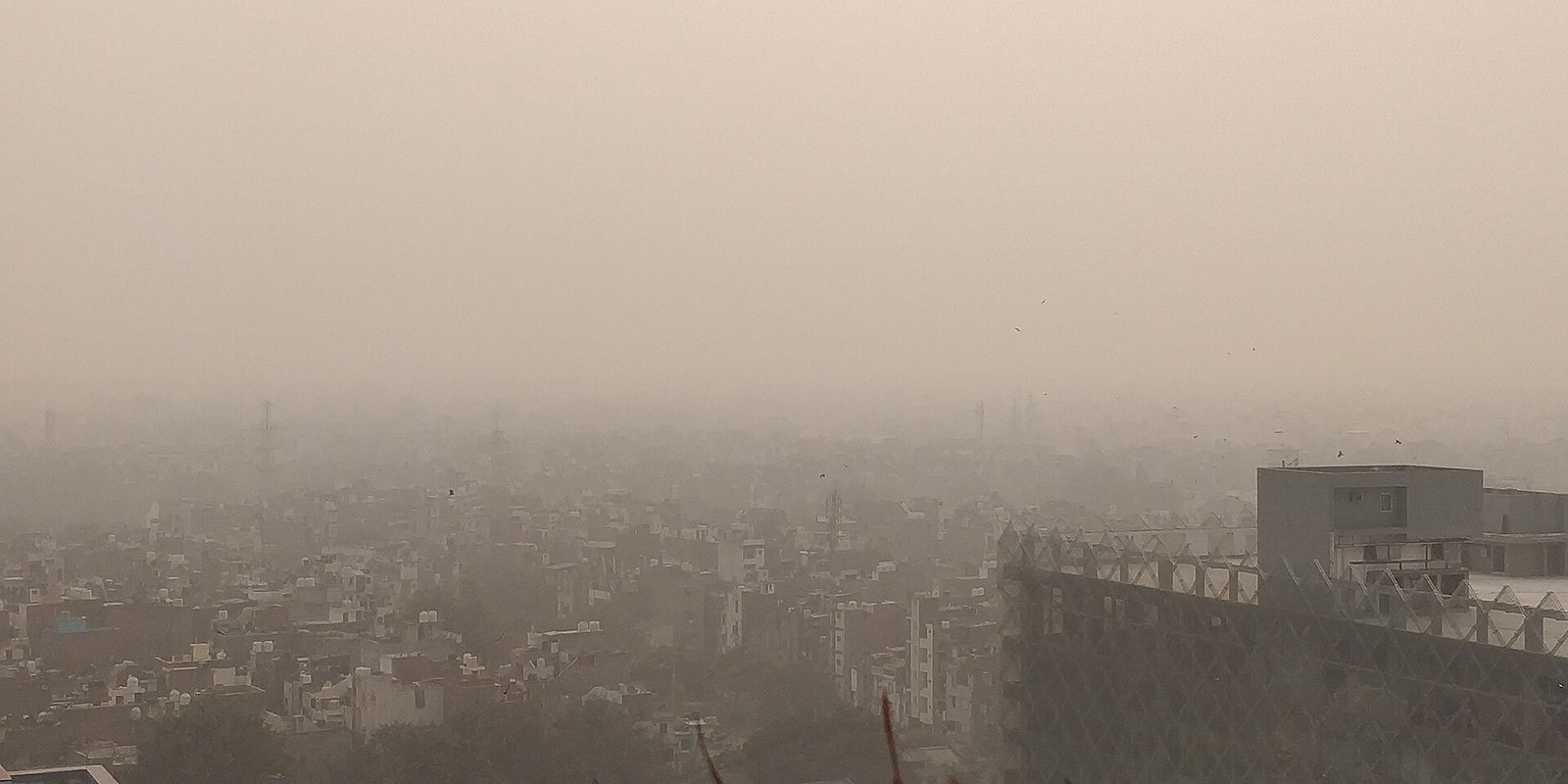
Delhi’s complete, year-round firecracker ban returned on Monday, as the two-day exception the Supreme Court had granted for certified green firecrackers over Diwali expired. The window did little to spare the capital’s air. Government monitoring data put Delhi’s overall Air Quality Index at 383 on Diwali morning, with 24 monitoring stations recording pollution in the “severe” category.
The Supreme Court’s order had permitted the use of certified green firecrackers in Delhi-NCR only on November 7 and 8, and only during two narrow windows, 6 am to 7 am and 8 pm to 10 pm, while also barring fireworks within 300 metres of hospitals, nursing homes and schools. The order stated explicitly that the region’s default, year-round firecracker ban would resume from November 9.
The exception came days after the Commission for Air Quality Management had already invoked Stage 3 of the Graded Response Action Plan across Delhi-NCR, after 26 monitoring stations recorded “severe” air quality on November 6. That order banned non-essential construction and mining work and shifted primary school classes up to Class 5 to a hybrid format in the capital. Those GRAP-3 curbs remain in force, on top of the renewed firecracker ban.
What the data showed on Diwali morning
Delhi’s overall Air Quality Index stood at 383 at 8 am on Sunday, according to hourly data from the Central Pollution Control Board’s Sameer app, as reported by Scroll.in. That is in the “very poor” band on the national index, one step below “severe”. Twenty-four of the city’s monitoring stations individually crossed 400, the threshold for “severe” air.
Jahangirpuri recorded the worst reading in the city at 450, followed by RK Puram at 448 and Punjabi Bagh at 446. Neighbouring satellite cities fared only somewhat better: Noida’s AQI stood at 319 and Gurugram’s at 322, both in the “very poor” range rather than “severe”.
| Location | AQI, Nov 6 (pre-Diwali, GRAP-3 trigger) | AQI, Nov 8, 8 am (Diwali morning) |
|---|---|---|
| Delhi (overall) | 380 | 383 |
| Punjabi Bagh | 453 | 446 |
| Jahangirpuri | Not separately reported | 450 |
| RK Puram | Not separately reported | 448 |
| Noida | Not separately reported | 319 |
| Gurugram | Not separately reported | 322 |
The comparison shows the city’s overall AQI barely moved between the GRAP-3 trigger point on November 6 and Diwali morning two days later, and Punjabi Bagh’s reading stayed in the “severe” band on both dates. The two-day cracker exception, in other words, was layered onto air that was already classified “severe” in parts of the city before a single cracker was lit.
Why the green-cracker exception did not hold
Scroll.in reported that vendors across the city continued selling conventional, non-certified firecrackers despite the Supreme Court’s order restricting sales to certified green variants within fixed hours. The outlet did not name specific markets or vendors in its account.
Pollution researchers and officials have, in past years, pointed to a mix of factors behind Delhi’s post-Diwali spikes, several of which Scroll.in’s report cited again this year: stubble burning in neighbouring Punjab and Haryana, vehicle emissions, falling temperatures, low wind speeds that trap pollutants near the ground, and emissions from industry and coal-based power plants. None of these factors is unique to this Diwali, but they compound with firecracker smoke during the same weather window every year.
What’s back in force from Monday
From November 9, the blanket, year-round ban on all firecrackers, green-certified or otherwise, is back across Delhi-NCR, under the same Supreme Court order that created the two-day exception. The region’s GRAP-3 restrictions, triggered on November 6, also remain active: non-essential construction and mining stay suspended, and primary schoolchildren up to Class 5 continue on hybrid classes in the capital.
Neither the Supreme Court’s order nor the Scroll.in report on Diwali morning’s readings says whether a stricter GRAP stage is being considered this week. GRAP-3 is one tier below the Commission’s most restrictive stage, GRAP-4, which the Commission has reserved in the past for sustained “severe-plus” pollution across the wider region rather than at individual stations.
Frequently asked questions
Is it legal to burst firecrackers in Delhi right now?
No. The Supreme Court’s exception for certified green firecrackers applied only to November 7 and 8, within set morning and evening hours. The region’s year-round ban on all firecrackers resumed from November 9.
Why did Delhi’s air stay in the “severe” range if only certified green crackers were allowed?
Government Sameer app data and Scroll.in’s reporting point to continued sales of non-certified firecrackers alongside seasonal factors such as stubble burning in Punjab and Haryana, falling temperatures and low wind speeds, on top of air that was already “severe” in parts of the city before Diwali.
Whether the readings ease over the coming days will depend largely on wind conditions, now that the complete firecracker ban and the existing GRAP-3 curbs are the only restrictions in place across the region.
Leave a Reply