
A leopard estimated at around 12 years old was found dead in the Bilaigarh forest range of Chhattisgarh’s Sarangarh-Bilaigarh district, its carcass apparently undiscovered for about 48 hours until a forest department team searching for elephants found it. Officials have registered a case and ordered a postmortem, Haribhoomi reported.
The carcass was located in compartment number 446 of the Dharashiv beat inside the Bilaigarh range, according to the report. Forest staff had been deployed to the area to track elephants after villagers reported the animals moving through nearby forest in recent days, and it was during that search, not a patrol specifically watching for leopards, that the team came across the body.
Divisional Forest Officer Pushpalata Tandon reached the spot with her team soon after being informed, inspected the site and issued instructions for the process that followed, the report said. It did not specify exactly when the leopard is believed to have died, only that the body had likely been lying in the forest for roughly two days before anyone found it.
Sarangarh-Bilaigarh is one of Chhattisgarh’s newer districts, carved out of parts of Raigarh and Baloda Bazar during the state’s 2021-22 district reorganisation and functioning on its own since September 2022, with Sarangarh as the headquarters. The Bilaigarh forest range falls within its limits.
What the postmortem and search turned up so far
A team of three veterinary doctors examined the carcass to determine how the leopard died, Haribhoomi reported. As of the report, the exact cause had not been established, and officials said it would become clear only once the postmortem findings are finalised.
After the examination, the forest department cremated the leopard’s remains with customary rites, according to the report. Separately, two dog squad teams, the kind typically brought in on wildlife cases to help trace physical evidence such as snares, poison residue or other signs of foul play, were deployed to search the surrounding forest.
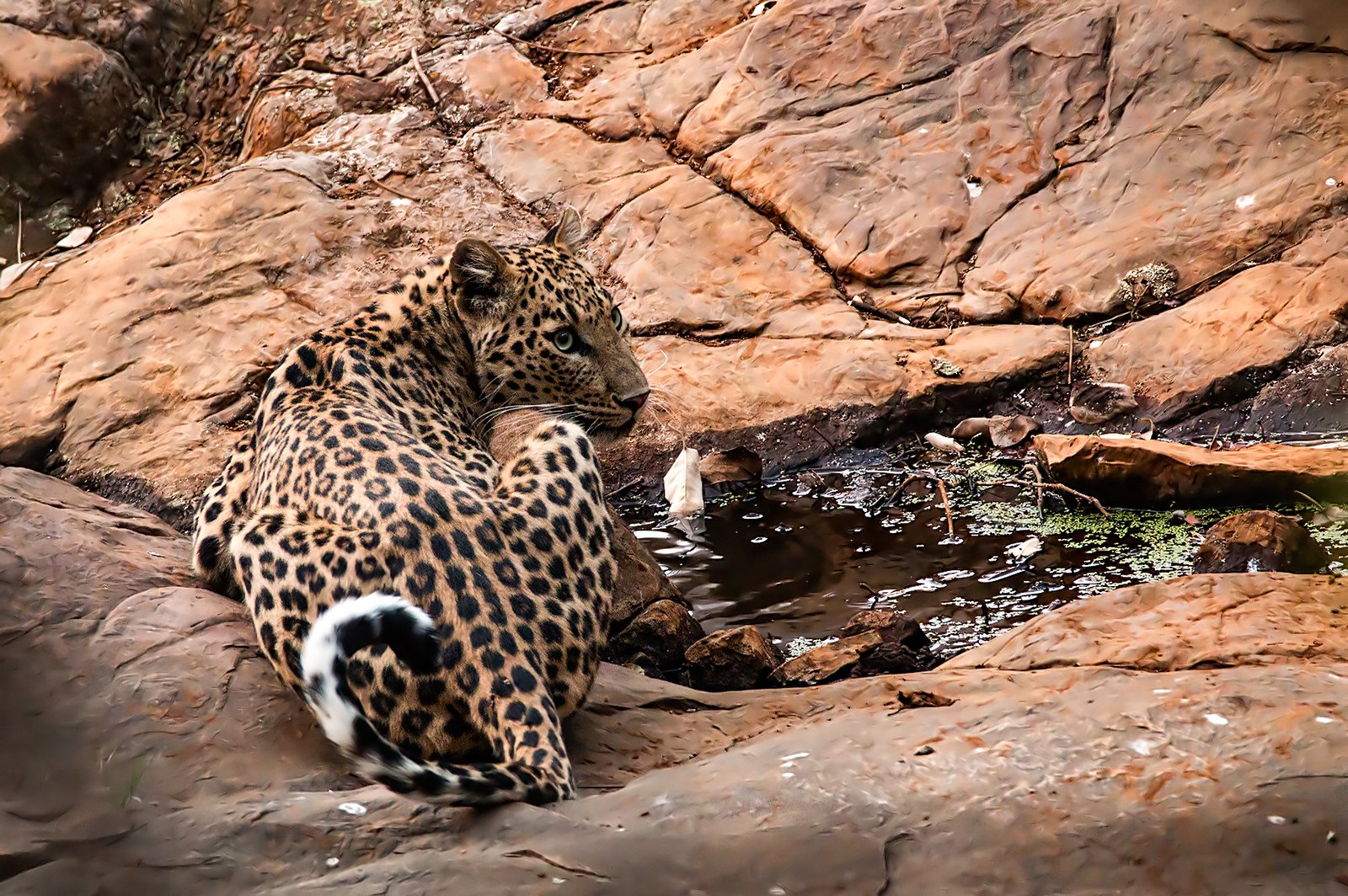
A case has been registered, but no cause yet
The forest department has registered a case to investigate the death further, Haribhoomi reported. The report did not name any suspect or specify what charge, if any, the case has been filed under, and officials have not said whether they are treating the death as natural, accidental, or a wildlife offence that needs separate action.
Until the postmortem report is finalised, the department is not ruling anything in or out, based on Haribhoomi’s account of the officials’ response at the site.
Leopards are listed under Schedule I of India’s Wildlife (Protection) Act, 1972, the law’s highest protection category. That status is why any unexplained leopard death, natural or otherwise, is routinely logged as a case and sent for a postmortem, rather than being closed out on the spot.
Why the 48-hour delay matters
What has drawn local attention is less the leopard’s death itself than how long it went unnoticed. Haribhoomi reported that the carcass lay in the forest for about 48 hours before anyone from the department came across it, and only because a separate search for elephants happened to pass through that part of the Bilaigarh range.
That gap has raised questions locally about how closely patrols cover compartment 446 and the rest of the Dharashiv beat, and whether the carcass was simply missed on a routine round or whether that stretch of forest does not get regular coverage at all, according to the report. Haribhoomi’s report did not say whether the department has committed to reviewing patrol frequency in the area, or to any accountability if a lapse is confirmed.
What is still unconfirmed
Several details remain open. The report does not give the leopard’s sex, does not say whether it was a resident animal known to the range or one passing through, and does not confirm whether the elephants whose movement prompted the original search were ever located. It also does not say how large the patrol team covering the Dharashiv beat normally is, or how often that specific compartment is checked, information that would be needed to judge whether the 48-hour gap reflects a one-off miss or a wider staffing or coverage issue.
None of that changes the two central facts already on record: a Schedule I-protected leopard is dead, and its body went undetected for roughly two days in forest that is supposed to be under watch.
Frequently asked questions
What caused the leopard’s death?
That is not yet confirmed. A three-member veterinary team examined the carcass, but Haribhoomi reported that the exact cause will only be clear once the postmortem report is finalised.
Where exactly was the carcass found?
In compartment number 446 of the Dharashiv beat, inside the Bilaigarh forest range of Chhattisgarh’s Sarangarh-Bilaigarh district, according to Haribhoomi. It was discovered during a search for elephants reported to be moving through the area, not a search for the leopard itself.
The postmortem findings, once released, will determine whether the department treats this as a natural death or opens a wider investigation into how the carcass went unnoticed for two days.
Leave a Reply