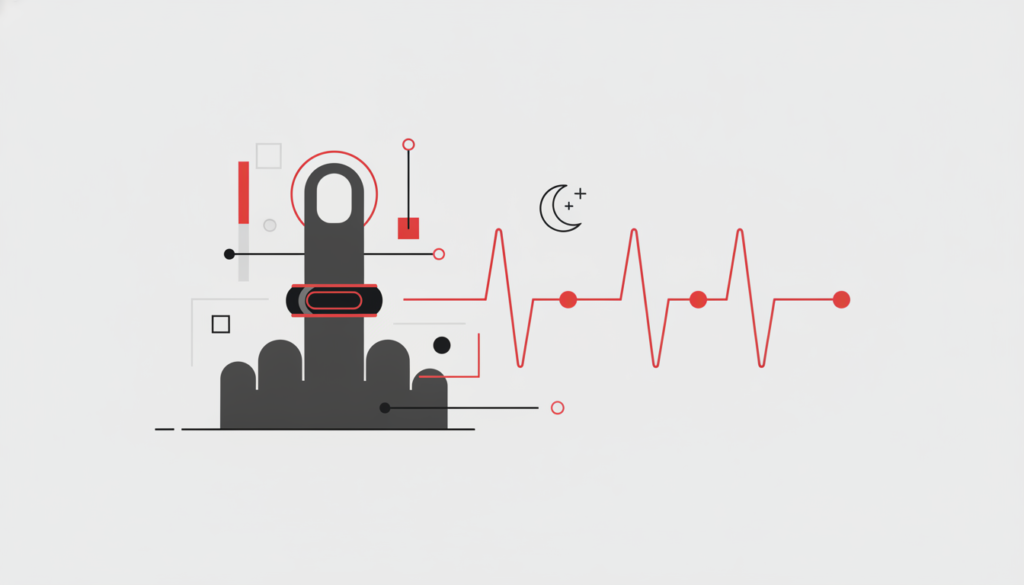
Samsung’s Galaxy Ring now detects how often a wearer’s breathing is disrupted each hour during sleep, not just whether sleep apnea risk is present, after the feature cleared both the US Food and Drug Administration and South Korea’s Ministry of Food and Drug Safety, Samsung announced. The upgrade builds on the Galaxy Ring’s original FDA clearance for sleep apnea risk detection.
What the upgraded feature actually does
The original version of the Galaxy Ring’s sleep apnea detection, authorised by the FDA in February 2024 under a De Novo pathway, only flagged moderate to severe sleep apnea risk. The new version uses AI to estimate the number of breathing disruptions per hour of sleep and sorts the result into mild, occasional, or frequent categories inside the Samsung Health Monitor app.
To generate a reading, a user needs to sleep at least five hours on two separate nights within any ten-day window. Samsung has repeated throughout its announcement that only a licensed physician can actually diagnose sleep apnea. The company’s own wording is that the feature “can lead to productive conversations with healthcare professionals,” not a standalone diagnosis.
How Samsung got here
Samsung’s sleep apnea detection feature did not start with the Galaxy Ring. The company first secured approval for the underlying feature from South Korea’s regulators in 2023, before the US FDA granted its De Novo authorization in February 2024, extending the clearance to both the Galaxy Watch and the Galaxy Ring at the time. De Novo is the FDA pathway used for novel, low-to-moderate-risk devices that have no existing equivalent already on the market, which is why Samsung has repeatedly pointed to the Galaxy Ring’s status as a first for the ring form factor specifically.
That two-year gap between the original Korean approval and the current upgrade reflects how incrementally regulators clear AI-driven health features on consumer wearables. Each added capability, in this case moving from a binary risk flag to an hourly disruption count with frequency categories, has required its own separate regulatory sign-off in both markets rather than arriving as a single bundled update.
Which devices get it, and when
The upgraded feature is rolling out now to the Galaxy Ring and the Galaxy Watch 9 running Wear OS 7.0 or later. Samsung has said the Galaxy Watch 7 and Watch 8 are expected to receive it through a future software update, without giving an exact date.
In South Korea specifically, the rollout follows a separate approval from the Ministry of Food and Drug Safety and is scheduled to reach the Galaxy Watch Ultra 2, Galaxy Watch 9, and Galaxy Ring through November, according to GSMArena’s reporting. Older Galaxy Watch models in Korea will stay on the earlier version of the feature.
Why this matters for the smart ring market
Samsung’s digital health lead Sharanya Desai has described the Galaxy Ring as the first and only FDA-cleared, over-the-counter ring device for sleep apnea risk detection, a claim rivals have not matched. Competing rings from Oura and Superhuman track nighttime disturbances but do not carry FDA clearance for sleep apnea detection specifically, giving Samsung a regulatory edge in a category where most wearable health claims stop at general wellness tracking rather than a cleared medical feature.
The upgrade also lands while Samsung and Oura are in an active patent dispute over smart ring technology, with a preliminary ruling expected soon. A stronger, more clinically specific sleep apnea feature gives Samsung another point of differentiation in that fight, independent of how the patent case itself is resolved.
For users already wearing a Galaxy Ring, the upgrade changes nothing about the hardware itself. It is a software and algorithm update delivered through the Samsung Health Monitor app, meaning existing ring owners get the more detailed breathing-disruption breakdown without buying new hardware, provided their device and app are on the supported versions.
Frequently asked questions
Does the Galaxy Ring diagnose sleep apnea?
No. Samsung says the feature only flags possible signs of the condition. A licensed physician is required for an actual diagnosis.
How much sleep data does the feature need?
At least five hours of sleep on two separate nights within a ten-day period before it will generate a reading.
Will older Galaxy Watches get the upgrade?
Samsung says the Galaxy Watch 7 and Watch 8 are expected to get it in a future update, but has not given a date. Older Watch models in South Korea will stay on the earlier feature version for now.
Watch for whether Samsung brings the upgraded feature to the Galaxy Watch 7 and Watch 8 before the Oura patent ruling lands.


Leave a Reply