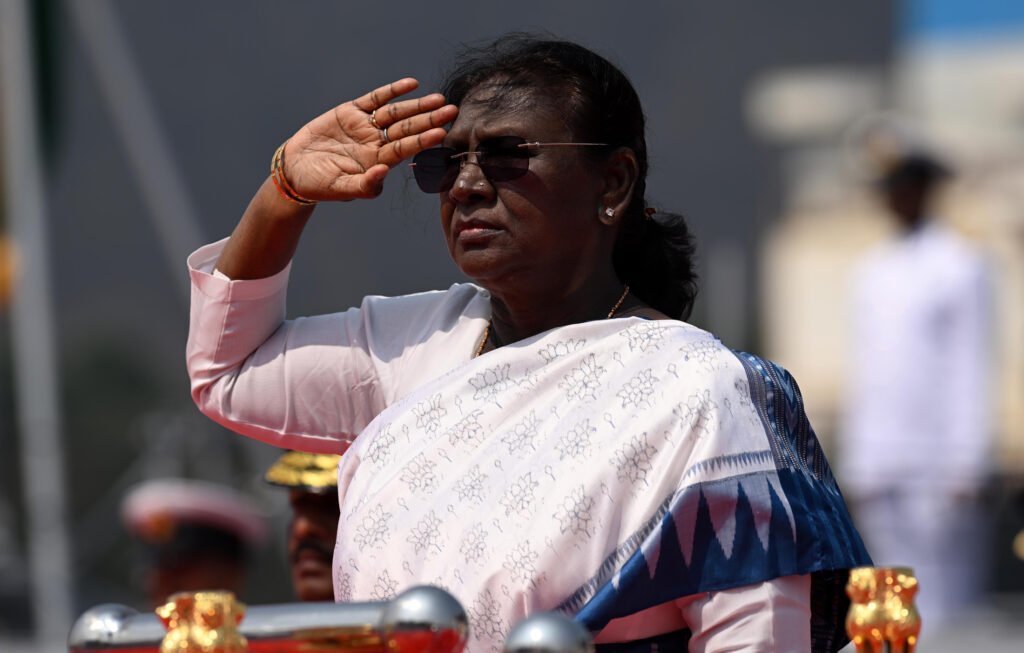
President Droupadi Murmu is in Jagdalpur on October 23 to attend the Muria Darbar, the centuries-old tribal assembly that closes Bastar Dussehra. She is also scheduled to interact with representatives of the Manjhi-Chalki community and address a public gathering at Lalbagh Maidan, according to IANS.
What is the Muria Darbar
The Muria Darbar began as a grievance-hearing assembly held after Dussehra in the former Bastar princely state, where village Manjhis and Mukhiyas placed their areas’ problems before the Maharaja. After 1947, it continued as a forum where elected representatives and administrative officials hear directly from Bastar’s tribal communities, per IANS’s report on the event’s history.
This year’s Darbar marks the end of Bastar Dussehra, a roughly 75-day festival built around Maa Danteshwari rather than Lord Ram, with no Ravan effigy burned, IANS reported. The Union Ministry of Tourism traces the festival’s origins to the 13th century and King Purushottam Dev, the fourth ruler of the Bastar dynasty, whose pilgrimage to Jagannath Puri is traditionally linked to the start of the region’s chariot processions, according to Outlook India‘s account of the Ministry’s records. The festival also involves seeking the blessings of Kachhan Devi before its key ceremonies, per the same report.
Who invited the President
Bastar MP and Dussehra Committee chairman Mahesh Kashyap formally invited President Murmu to this year’s celebrations, and Manjhi-Chalki community representatives separately asked her to visit Bastar, both of which she accepted, according to IANS. Chief Minister Vishnu Deo Sai said the president’s arrival in Bastar is “a moment of great joy and pride for all of us,” and directed officials to arrange all facilities for people attending the programme.
How Jagdalpur prepared for the visit
Bastar District Collector Akash Chhikara and Superintendent of Police Shalabh Sinha led a review meeting covering security, traffic management, protocol, seating and logistics, and personally inspected the Lalbagh Maidan venue, IANS reported. Preparations at the ground included stage construction, separate entry and exit routes for dignitaries and the general public, drinking water supply, emergency medical facilities and vehicle parking.
| Day | Time | City | Event |
|---|---|---|---|
| Oct 22 | 12:45-1:00 pm | Raipur | Release of ₹200 commemorative coin honouring Mata Hasi Devi |
| Oct 22 | 4:00 pm | Raipur | Seva Samman Parv and Yuva Prabodhan programmes, Balbir Singh Juneja Indoor Stadium |
| Oct 23 | Not specified | Jagdalpur | Muria Darbar, Manjhi-Chalki interaction and public address at Lalbagh Maidan |
What happened on the first day, in Raipur
The Jagdalpur leg follows the first day of Murmu’s two-day Chhattisgarh trip, which began in Raipur on October 22. Chief Minister Vishnu Deo Sai received her at Swami Vivekananda Airport along with Deputy Chief Minister Vijay Sharma, Union Minister of State Tokhan Sahu, and state ministers Shyam Bihari Jaiswal and Rajesh Agrawal, according to Dainik Jagran. Between 12:45 pm and 1 pm, she released a ₹200 commemorative coin honouring Mata Hasi Devi, the outlet reported.
At 4 pm, Murmu took part in the Seva Samman Parv and Yuva Prabodhan programmes at the Balbir Singh Juneja Indoor Stadium in Budhapara, events tied to the Nuakhai harvest festival, Dainik Jagran reported. Separately, IANS reported that Governor’s Secretary C.R. Prasanna chaired a coordination meeting at Lok Bhavan ahead of the visit, and that the state’s Chief Secretary issued guidelines to district collectors in the Raipur and Bastar divisions covering arrangements for both legs of the trip.
Dainik Jagran reported that more than 2,000 police personnel were being prepared for deployment across the two days, with traffic restrictions expected along the convoy route between the airport, Lok Bhavan and the Budhapara stadium, affecting commuters in Shankar Nagar, Civil Lines and Budhapara.
Frequently asked questions
Why doesn’t Bastar Dussehra involve burning a Ravana effigy?
Unlike the mainstream festival, Bastar Dussehra centres on Maa Danteshwari, the presiding deity of tribal Bastar, and follows a distinct ritual calendar that has nothing to do with the Ramayana narrative, per IANS’s report on the festival.
Who takes part in the Muria Darbar today?
Elected representatives, ministers and administrative officials sit with Manjhi and Mukhiya tribal chiefs to hear local grievances, a role once held by the Maharaja of Bastar before the princely state merged into India in 1947, IANS reported.
How long does Bastar Dussehra run?
This year’s festival began on August 21 and concludes with the Muria Darbar on October 23, a span of roughly 75 days, according to IANS.
What to watch
The Darbar traditionally produces direct exchanges between tribal chiefs and the state’s administration on local issues. Any commitments made at Lalbagh Maidan on infrastructure, tribal welfare or Bastar’s development will be the ones worth tracking once the event concludes.

Leave a Reply