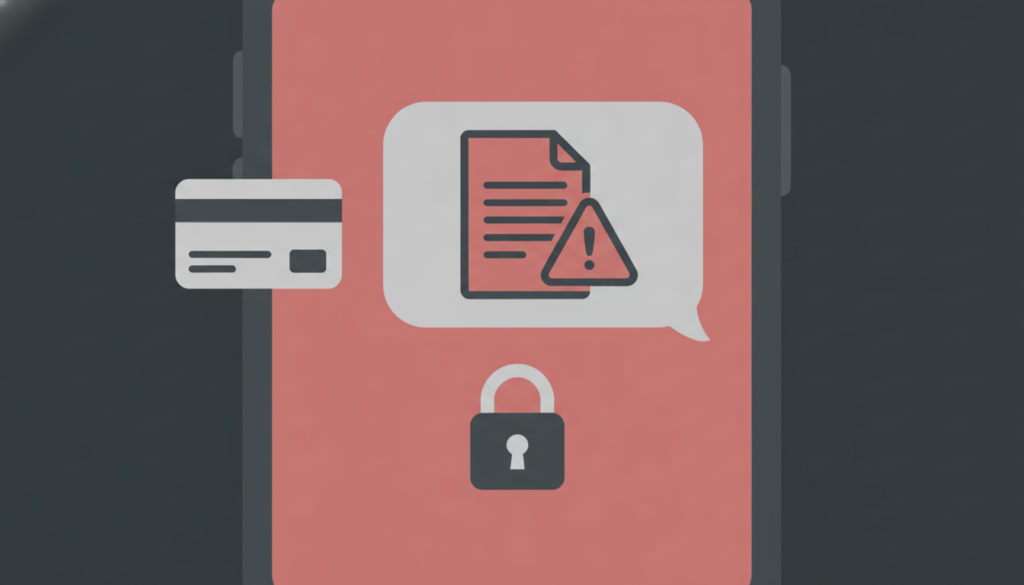
A railway workshop employee in Raipur’s Khamtarai area lost Rs 1,83,443 from his bank account on November 19 after an APK file downloaded automatically through WhatsApp and gave fraudsters remote access to his phone. Khamtarai Police have registered a case and traced the breach to an auto-download setting he had not turned off, according to Patrika.
What happened to Dev Rai’s account
Patrika identified the victim as Dev Rai, who works at a railway workshop in Raipur. On the afternoon of November 19, he began receiving debit alerts from his bank without having made any transaction himself.
The first alert was followed by two more withdrawals in quick succession. By the time he noticed, Rs 1,83,443 had been taken from his account, Patrika reported.
Rai told police the breach traced back to a WhatsApp message that carried an APK file, a format used to install Android apps outside the official Play Store. Because his phone’s WhatsApp auto-download setting was still switched on, the file installed itself without him opening or approving it.
How the fraud got past his Rs 1 lakh UPI limit
Rai’s UPI account carried a daily transaction limit of Rs 1 lakh, a safeguard meant to cap losses from exactly this kind of fraud. Patrika reported that the final amount withdrawn crossed that limit regardless, since the malicious app gave attackers direct access to the device itself rather than just his UPI app.
With that level of access, fraudsters are typically able to read one-time passwords and banking notifications as they arrive, and in some cases trigger multiple smaller transactions back to back, a pattern consistent with the repeated withdrawals Rai saw on his account.
What Khamtarai Police found
Khamtarai Police registered a case after Rai’s complaint and examined his phone, Patrika reported. The examination confirmed the APK file and the active auto-download setting that let it install without a prompt.
The investigation into the fraudsters behind the transfer is still ongoing, and Patrika’s report did not name a suspect or say whether any of the withdrawn amount has been recovered.
How to avoid this kind of fraud
WhatsApp’s auto-download setting, when left on, saves any file sent to a chat, including a disguised APK, straight to the phone’s storage without asking first. Turning it off for documents and unknown senders removes the step that let the fraud reach Rai’s device in the first place.
Android apps are ordinarily installed through the Play Store, which screens apps before listing them. An APK received as a file attachment skips that screening entirely, which is why banks and police routinely warn against opening one from an unknown or unexpected sender.
Frequently asked questions
What is an APK file and why is it risky over WhatsApp?
An APK is an Android app installer. Outside the Play Store, it is a common way to plant apps that read messages, notifications, and banking one-time passwords without the phone’s owner noticing.
Does a UPI daily limit stop this kind of fraud?
Not on its own. A UPI limit caps transfers made through the UPI app, but a malicious APK that takes over the device can enable other withdrawal routes, which is what investigators say happened in Rai’s case.
How can I turn off WhatsApp’s auto-download?
In WhatsApp, go to Settings, then Storage and Data, and set media auto-download to “Never” for photos, videos, and documents, particularly on mobile data.
Khamtarai Police’s investigation remains open. Patrika’s report did not say whether the bank has frozen the receiving accounts or whether any funds have been traced.

Leave a Reply