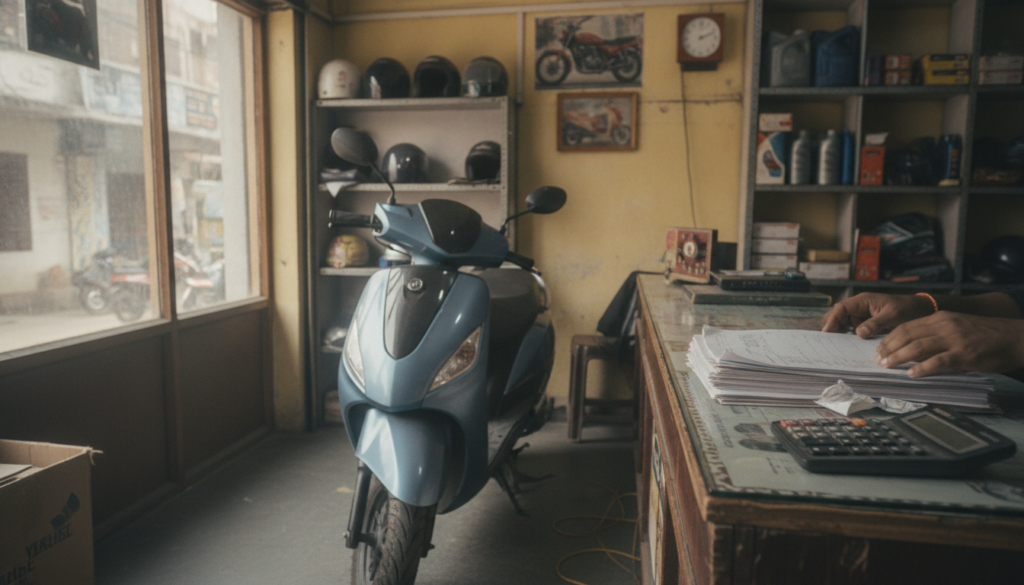
The GST department in Bemetara, Chhattisgarh, issued notices over an e-scooter cashback scheme run by two local suppliers, after their sales pitch promised buyers a 100 percent refund. The suppliers have three days to submit stock registers, sales invoices and transaction records, Patrika reported.
Bemetara is a district in Chhattisgarh, and the notices mark the local tax office’s first public enforcement step against a cashback-linked e-scooter sales model that has been running in the area, according to Patrika’s report.
What the scheme promised buyers
Patrika reported that scooters worth about Rs 35,000 were being sold for close to Rs 70,000, with sellers promising to refund the entire amount as cashback within 10 months. On paper, a buyer who held on for ten months would effectively get the vehicle free.
The arithmetic is what first drew scrutiny, Patrika reported: the upfront price was roughly double the scooter’s actual value, with the difference pitched back to the buyer as a future cashback rather than an upfront discount. That structure meant the buyer paid tax on the inflated Rs 70,000 figure immediately, while the promised Rs 35,000 refund remained a future, unsecured promise.
Patrika reported that neither the company nor the local dealer gave customers any written guarantee that the cashback would actually be paid. The online tax invoice handed to buyers reportedly left out the cashback terms, a payment timeline, and who would be responsible if the promised amount never arrived.
Customer payments went directly into the company’s bank account rather than the local supplier’s, according to Patrika. The local supplier’s role was limited to collecting the money and handing over the online invoice, and customers reportedly did not receive a receipt for what they paid.
What the GST department’s inquiry found
A preliminary inquiry by the department turned up discrepancies in the paperwork behind the sales, Patrika reported. These reportedly included mismatched GST numbers and state details on invoices, customer addresses missing altogether, and CGST and SGST charged in cases where the supply crossed state lines and may have required IGST instead.
Under India’s GST structure, a sale within the same state is split between Central GST (CGST) and State GST (SGST), while a sale that crosses a state border is taxed as Integrated GST (IGST) instead. Charging CGST and SGST on a transaction that should have been billed as IGST, as Patrika reported in some of these invoices, is the kind of mismatch that draws a tax department’s attention because it can mean the tax is being deposited with the wrong jurisdiction.
Because the first round of answers from the two suppliers fell short, the department asked for the information again, Patrika reported. It is now cross-checking stock records, sales figures and tax payments, and trying to establish which state and which registered entity the tax was actually being deposited through.
The department has not named the company or the two local suppliers in its public statements so far, and Patrika’s report does not quote an individual official by name or cite a specific notice number.
Patrika’s report also does not say whether the inquiry has widened beyond these two suppliers to other sellers in Bemetara or neighbouring districts running similar cashback-linked offers, or whether the company supplying the scooters is itself registered in Chhattisgarh.
Frequently asked questions
What exactly did the GST department ask the suppliers for?
Stock registers, sales invoices and transaction records, with three days to respond, Patrika reported.
Why does the cashback promise matter to a tax department rather than just the buyer?
Because Patrika reported that the invoices themselves showed mismatched GST numbers, missing customer details, and the wrong tax head charged on some transactions, which is a tax-compliance issue independent of whether the cashback is ever paid.
What should a buyer who already paid under this scheme do?
Patrika’s report does not mention any department advisory to existing buyers. No on-record guidance on refunds or complaints has been issued so far.
What happens next
The two suppliers have three days from the notice to respond with their stock, sales and transaction records, Patrika reported. If their answers do not satisfy the department, further action under tax rules is expected to follow.
For now, the department’s reconciliation of stock, sales and tax deposits is ongoing, and no penalty or formal order has been reported yet. Buyers who have already paid for a scooter under the cashback offer have not been told, in any on-record statement so far, whether or when they will get the promised refund.
What to watch next: whether the two suppliers’ response within three days leads to a formal GST order, and whether buyers who paid under the cashback promise get any written assurance of a refund.

Leave a Reply