Apollo Economist Finds No Profit Payoff From AI at Most Big US Companies
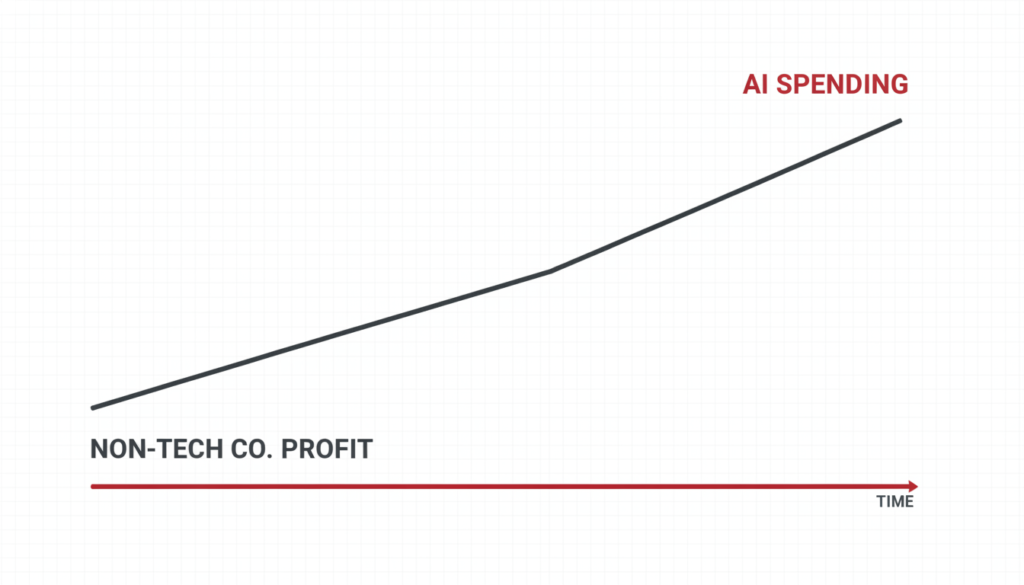
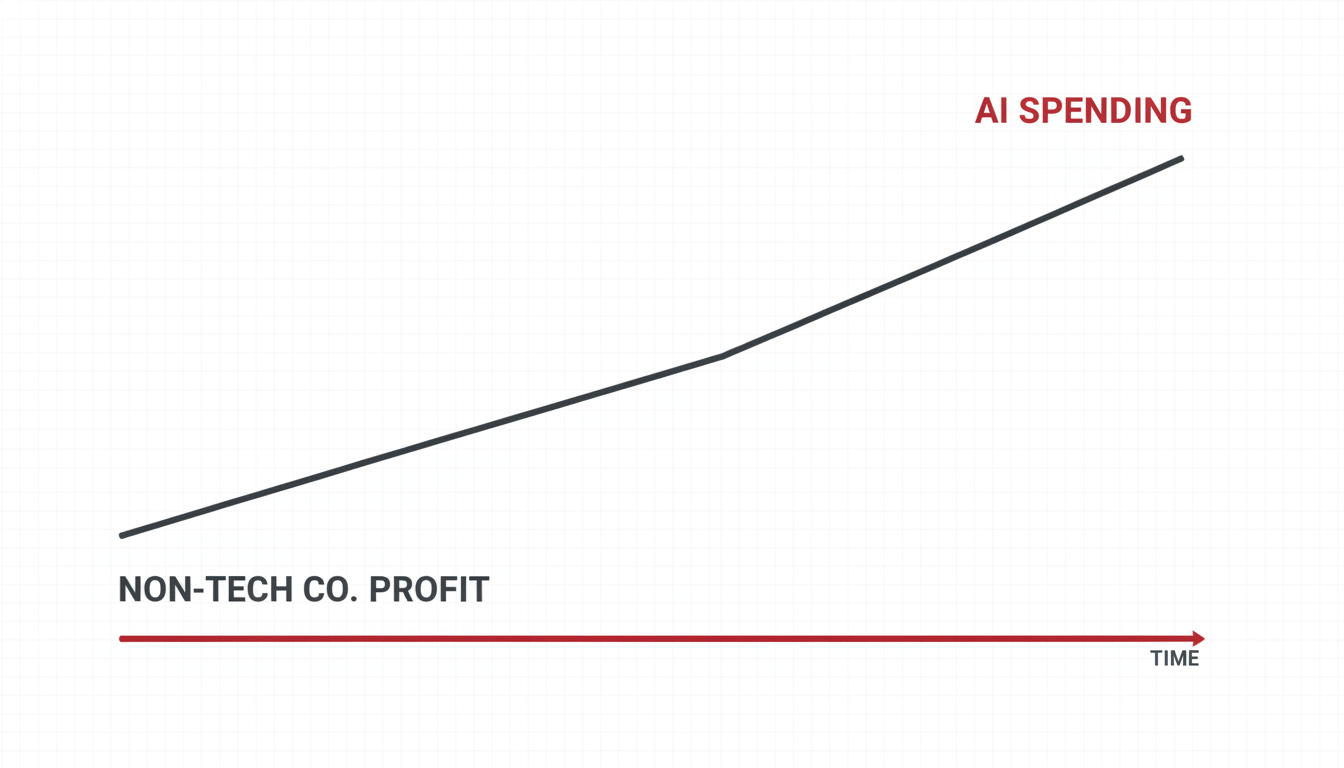
Torsten Slok, chief economist at Apollo Global Management, said in an October 25 research note that artificial intelligence has produced no measurable profit gain at most large American companies outside the technology sector. His analysis of the S&P 493, the S&P 500 minus seven major tech firms, found flat profit margins and flat revenue per worker despite heavy AI spending.
Slok published the note, titled “No signs of AI payoff outside the tech sector,” on Apollo’s own research site. TechCrunch and other outlets picked up the note the same day.
The S&P 493 excludes Alphabet, Amazon, Apple, Meta, Microsoft, Nvidia and Tesla, the seven companies that have driven most of the index’s AI-linked stock gains since 2023. Slok’s note argues that once those seven are stripped out, the remaining 493 companies show no sign that AI tools are translating into higher profits or more output per employee.
What Slok’s analysis found
Slok’s note is built around five charts. The first shows revenue per worker, adjusted for inflation, rising for the Magnificent Seven since late 2019 while staying flat for the S&P 493. The second shows the same divide in profit margins, up for the seven big tech names and flat for everyone else.
A third chart uses utilization-adjusted total factor productivity data from the San Francisco Federal Reserve, a measure economists use to track output per unit of input across the whole economy. Slok wrote that this series still shows no sign of AI lifting productivity growth, despite more than two years of rising AI adoption.
Two further charts, drawing on data from corporate card and spend-management firm Ramp alongside Apollo’s own figures, show AI spending concentrated among a small number of companies, and what Slok called circularity in how much businesses spend on AI tokens, the units AI models use to process requests. He wrote that mainstream firms are increasingly treating token spending as a cost that weighs on margins rather than a source of growth, while venture-backed startups keep spending more on the newest models.
Why Slok says the gap exists
Slok argued that running a business successfully depends on judgment, accountability, trust and culture, qualities he says AI tools do not capture. “AI may be a great calculator, but in business, intelligence is mostly judgment,” he wrote.
That framing puts Slok’s note at odds with the investment thesis driving AI infrastructure spending, which assumes that cheaper AI compute will eventually show up as broad corporate productivity gains. Apollo’s own business includes lending to and investing around data center and AI infrastructure deals, giving the firm a direct stake in how that thesis plays out.
Slok’s note frames the question as one that will be settled by the hundreds of ordinary S&P 493 companies buying AI tools, not by the handful of firms building and selling the underlying infrastructure. On his reading, there is no evidence yet in either revenue growth or margins outside tech to support the scale of spending now going into AI.
How this fits the wider AI spending story
The note lands as big tech companies continue record capital spending on AI data centers and chips, spending largely justified to investors on the promise that AI will eventually lift productivity across the broader economy. Slok’s data points to that broader lift not having arrived yet for the typical large American company.
Slok’s note does not say AI spending is wasted or that the pattern will persist. It says that, as of his October analysis, the S&P 493’s financial results do not yet show the payoff that would justify the scale of current AI investment outside the seven companies already profiting from selling AI itself.
The note does not name individual non-tech companies or industries most affected, and it does not estimate how long a payoff might take to show up if it eventually does. Its focus is the aggregate pattern across the S&P 493 as a group, using the Magnificent Seven as the comparison point for what AI-linked financial gains currently look like when they do appear.
Frequently asked questions
What is the S&P 493?
It is the S&P 500 index with Alphabet, Amazon, Apple, Meta, Microsoft, Nvidia and Tesla removed, the seven stocks most responsible for the index’s AI-driven gains since 2023.
Did Slok say AI spending by companies is a mistake?
No. His note says the data does not yet show a profit payoff outside the tech sector, not that the spending will never pay off.
Who is Torsten Slok?
He is the chief economist at Apollo Global Management, an asset management firm that also lends to and invests in AI data center and infrastructure deals.
Does this mean AI companies themselves are unprofitable?
No. The note is about the companies buying and using AI tools outside the tech sector, not about the revenue of the Magnificent Seven or other firms that build and sell AI infrastructure and services, which Slok’s own charts show gaining.
Leave a Reply