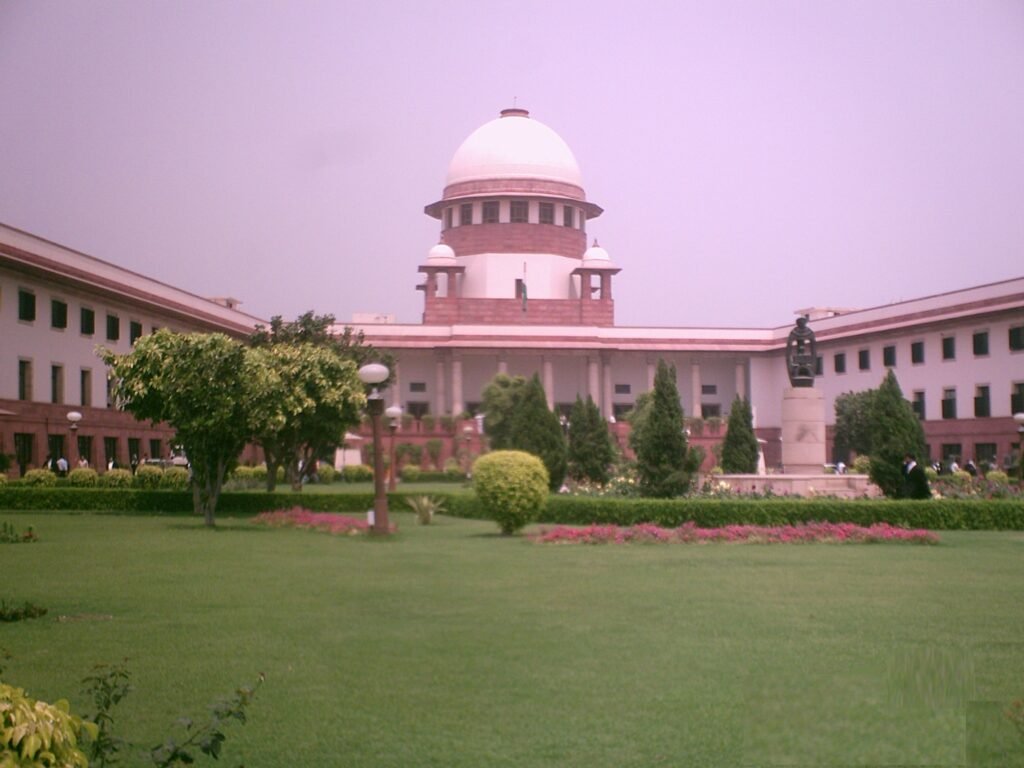
The Supreme Court on Monday ordered West Bengal’s appellate tribunals to prioritise appeals from voters whose names were deleted during the state’s special intensive revision (SIR) of electoral rolls, directed the Election Commission to add more tribunals, and fast-tracked cases from Kolkata ahead of expected municipal polls.
The background
The special intensive revision is the Election Commission’s door-to-door re-verification of electoral rolls, carried out in West Bengal ahead of the state’s next assembly election. Anyone left off the revised rolls, or anyone objecting to a name being added, can appeal to a dedicated appellate tribunal rather than approach a regular court first.
The Supreme Court had already ordered the tribunals set up in a March order, and in April it directed them to give out-of-turn hearings to voters who could show urgent grounds for being wrongly excluded. Monday’s order goes further, splitting all pending appeals by category and attaching a fixed one-week deadline to one specific set of them.
What the court ordered
A bench of Chief Justice of India Surya Kant and Justices Joymalya Bagchi and V Mohana directed the tribunals to split pending appeals into two categories, those filed by voters challenging their own deletion from the rolls, and those filed by other electors seeking to exclude someone else’s name. The bench said appeals seeking exclusion “does not involve any urgency” and can wait, according to Scroll.in’s report of the order.
The court also directed the Election Commission, in consultation with the Calcutta High Court’s chief justice, to increase the number of tribunals hearing the appeals. It asked the commission to identify alternative premises in central Kolkata or near the airport so tribunals there can move faster.
Why Kolkata is the priority
Tribunals have been told to identify appeals from voters excluded in the Kolkata Municipal Corporation area and decide them within a week, since municipal polls in the city are expected before December 7. The deadline does not apply to the rest of the state’s backlog.
The scale of the backlog
West Bengal’s final electoral rolls, published in February, initially excluded more than 61 lakh voters, with about 60 lakh of those cases going through adjudication as “doubtful and pending” entries. By April 6, roughly 91 lakh voters, nearly 11.9 percent of the state’s pre-revision electorate, had been removed from the rolls.
Of the 38.3 lakh appeals filed against the revised rolls, about 22 lakh came from voters contesting their own deletion, and at least 16.1 lakh came from electors challenging someone else’s inclusion. Tribunals had disposed of roughly one lakh appeals so far. Petitioners’ counsel Prashant Bhushan told the court that 93 percent of appellants in those decided cases were found eligible for inclusion, according to the same report.
The tribunals, led by panels of former Calcutta High Court judges, were set up after an earlier Supreme Court order in March and began hearing appeals in April. In September, the Election Commission had told the court it was considering raising their number to 42, matching the state’s parliamentary constituencies, from the 19 originally constituted. Monday’s order does not fix a final number, leaving that figure to the Election Commission and the Calcutta High Court’s chief justice.
What happens next
The Election Commission now has to report back on the additional tribunal strength and the alternative Kolkata premises. The court has not fixed an overall deadline for clearing the wider backlog, only the one-week window for Kolkata Municipal Corporation appeals. The 16.1 lakh appeals contesting other voters’ inclusion stay deferred for now, meaning those additions to the rolls remain in place while that category waits its turn.
Frequently asked questions
What is the special intensive revision (SIR)?
It is the Election Commission’s exercise to revise West Bengal’s electoral rolls, which led to the deletion and addition of voter names ahead of the state’s next elections.
How many West Bengal voters were removed from the rolls?
Roughly 91 lakh voters, about 11.9 percent of the state’s pre-revision electorate, had been removed as of April 6, after an initial February list excluded more than 61 lakh names.
Why did the Supreme Court prioritise Kolkata appeals specifically?
Kolkata is expected to hold municipal polls before December 7, so the court ordered tribunals to decide appeals from voters excluded in the Kolkata Municipal Corporation area within a week.

Leave a Reply