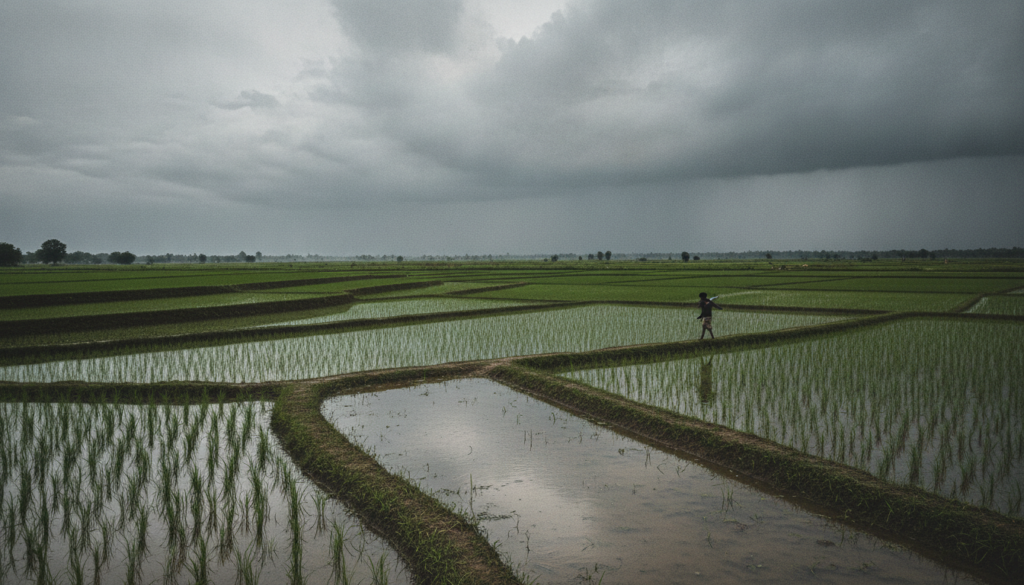
Chhattisgarh’s agriculture department has asked farmers to pause paddy harvesting for the next few days as a weather system over the southeast Bay of Bengal is forecast to bring winds of 115 to 140 km/h and heavy rain across the state from October 25 to 29.
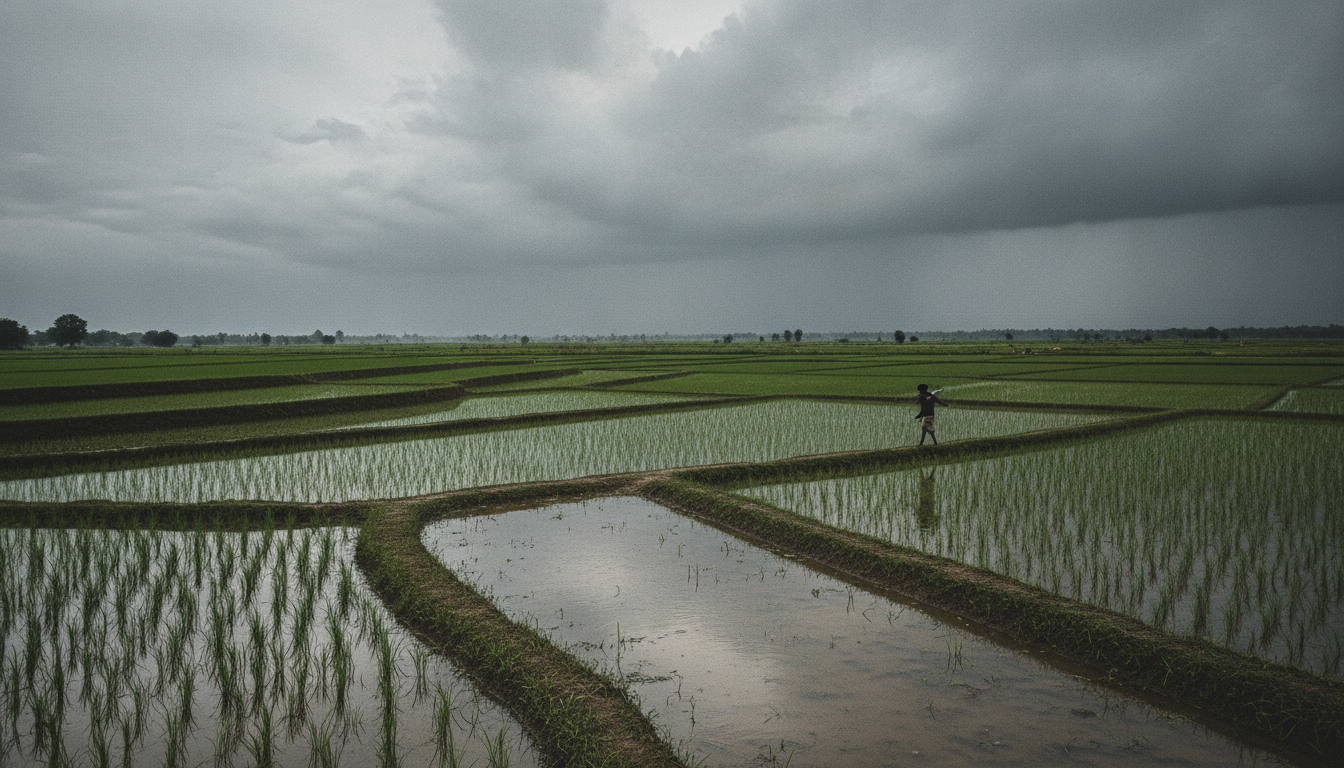
The advisory came from Indira Gandhi Krishi Vishwavidyalaya, Raipur, the state’s agricultural university, according to Haribhoomi. Agriculture Minister Ramvichar Netam and Agriculture Production Commissioner Siddharth Komal Singh Pardeshi have directed field staff across the state to stay on alert through the rain spell.
The alert lands in the middle of the paddy harvest season, when standing crop left in the field is most exposed to wind and waterlogging damage. Chhattisgarh is one of India’s larger rice-growing states, and a multi-day rain spell during harvest is a recurring risk farmers in the state watch closely every October.
Which districts are affected, and when
The rain spell is expected to move across the state over five days, with some districts seeing extremely heavy rain and the spread widening to cover the entire state by October 28 and 29, Haribhoomi reported.
| Date | Districts forecast to see heavy to extremely heavy rain |
| October 25 | Bastar, Dantewada, Sukma (extremely heavy in spots); Raipur, Gariaband, Dhamtari, Mahasamund, Durg, Rajnandgaon (rain) |
| October 26 | Durg, Balod, Rajnandgaon, Mohla-Manpur-Ambagarh Chowki, Kondagaon, Kanker, Narayanpur, Bastar, Bijapur, Sukma |
| October 27 | Rain continuing across most of the state |
| October 28 to 29 | All districts, with heavy to very heavy rain in some places |
What the advisory tells farmers to do
The university’s advisory asks farmers to pause harvesting of mature paddy, pulses and oilseeds for the next two to four days and to move any already-harvested crop to dry, covered storage quickly. Fields should be drained to prevent waterlogging, and pesticide or fungicide spraying should wait until the rain clears.
Vegetable growers are advised to stake creepers such as bitter gourd and bottle gourd and to support banana plants and fruit trees against wind damage. For livestock, the advisory warns against tying animals under trees or in open areas during the storm, and recommends keeping dry fodder and clean drinking water on hand.
Farmers planning Rabi sowing are advised to hold off until the first week of November, after the rain spell and the resulting soil moisture have settled.
What it means for this season’s harvest
A five-day rain spell during peak harvest raises the risk of grain loss for crop still standing in the field, particularly in Bastar, Dantewada and Sukma, where the heaviest rain is expected first. Crop that is cut but not yet moved to storage is the most exposed, which is why the advisory’s immediate instruction is to get harvested paddy under cover rather than wait out the weather in open fields.
The advisory does not put a figure on the acreage at risk or an estimated loss, and no district-level damage assessment has been issued yet since the rain had only begun when the alert was published.
The timing matters because paddy accounts for the bulk of Chhattisgarh’s kharif cultivation, and most districts in the state’s rice belt, including Durg, Rajnandgaon, Mahasamund and Dhamtari, appear directly in the advisory’s affected-district list. A wet harvest window typically lowers both the quantity farmers can bring in and the grain quality that determines the price millers and procurement centres will pay.
Frequently asked questions
Is a cyclone expected to make landfall in Chhattisgarh?
No. Chhattisgarh is a landlocked state. The weather system is forming over the Bay of Bengal, and the state is affected only by the rain and wind bands that spread inland from it, not by a direct landfall.
How long is the rain expected to last?
The advisory covers October 25 to 29, with the heaviest spread reaching all districts by October 28 and 29, according to Haribhoomi’s report on the advisory.
Should farmers resume harvesting once the rain stops?
The advisory’s window for pausing harvest is two to four days from when it was issued. It does not specify an exact resumption date, since that depends on how quickly fields dry out after the rain clears.
Rain during the harvest window is not unusual for Chhattisgarh in late October, but the scale of this advisory, covering every district in the state by its final two days, is wider than a routine localised shower warning. The agriculture department’s response has so far been limited to the farm advisory itself, with no financial relief or compensation scheme announced at this stage.
Leave a Reply