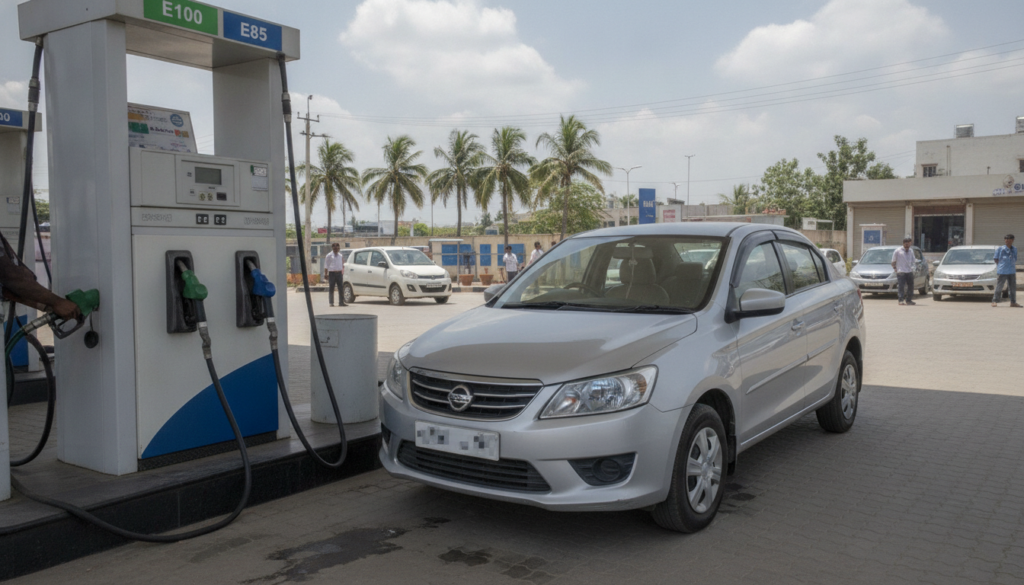
The Ministry of Road Transport and Highways has amended the Central Motor Vehicles Rules to let compatible flex-fuel vehicles run on E100, fuel that is almost entirely ethanol, in addition to the already-permitted E85 blend. The changes took effect this week, building on rules Union Minister Nitin Gadkari said he signed in June.
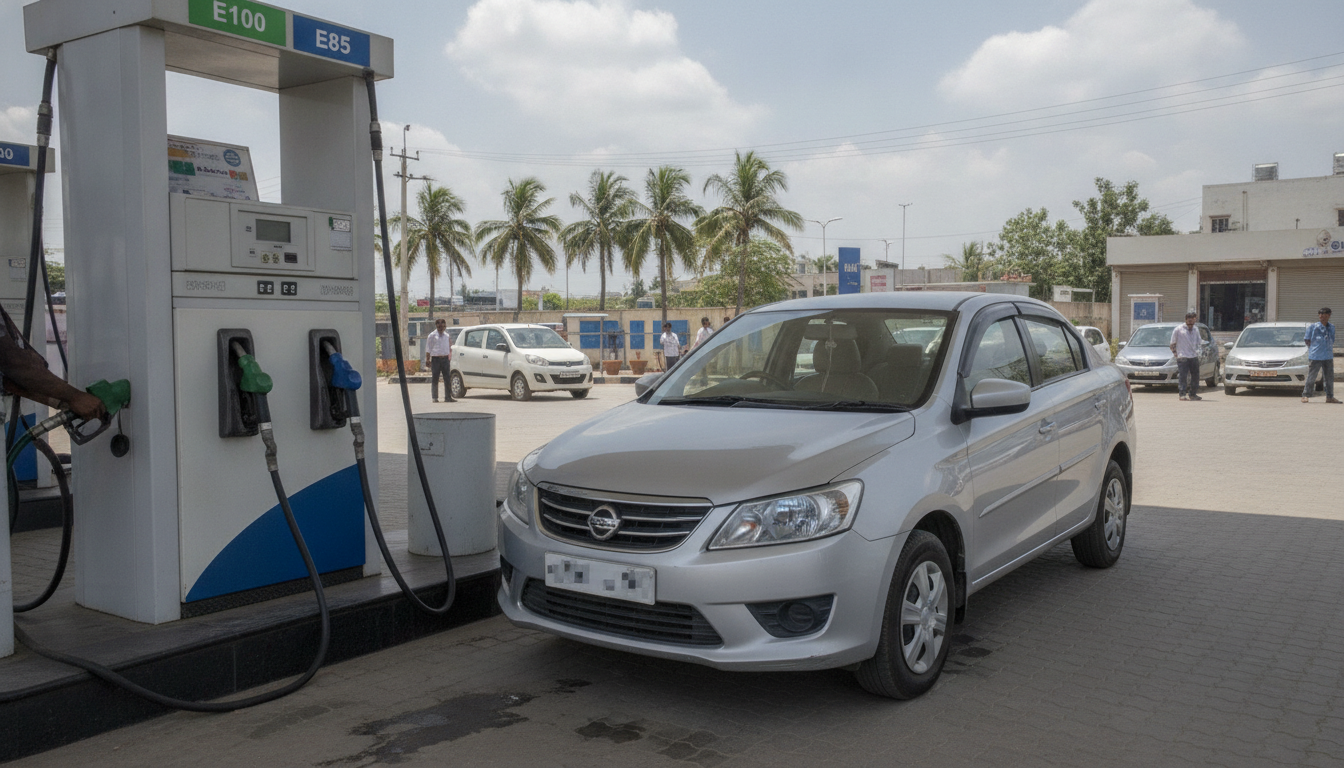
What exactly changed
The amendment updates Rule 115 of the Central Motor Vehicles Rules, 1989, to formally recognise E100 as a legal automotive fuel alongside E85, according to Scroll.in. The ministry had first floated the change through a draft notification in April 2026, opening a 30-day public comment window before finalising it.
Gadkari said in June that he had cleared the regulatory path for E100-compatible vehicles. “Last night at 8 PM, I signed the file,” he said at an event in Nagpur, describing it as the step that would let automakers legally sell vehicles built to run on pure ethanol, per a report by Rushlane.
Regular petrol vehicles, including those built only for E20, cannot run on E85 or E100. The new rules apply specifically to flex-fuel vehicles (FFVs), which are engineered to run on a range of ethanol blends.
The ministry’s original draft, issued on April 30, 2026, had proposed adding E85, E100 and B100 biodiesel to the vehicle regulatory framework together, following India’s earlier rollout of 20% ethanol blending nationwide, according to Autocar Professional.
Why the government is pushing higher ethanol blends
The move builds on the government’s existing Ethanol Blended Petrol programme, which already mandates 20% ethanol blending in all petrol sold nationwide. Gadkari has previously framed the push as a way to cut India’s fuel import bill, though he did not cite a specific rupee figure for potential savings, per Rushlane’s report on his June remarks.
Automakers including Toyota, Suzuki, Hyundai and MG are expected to bring ethanol-compatible models to market following the regulatory clearance, Rushlane reported, citing Gadkari. Maruti Suzuki has already showcased a flex-fuel WagonR built to run on blends from E20 to E100, according to Scroll.in.
What this means for existing E20 complaints
The expansion to E100 and E85 comes as the existing E20 mandate, for standard petrol vehicles, continues to draw complaints. A LocalCircles survey published July 5 found 53% of surveyed petrol vehicle owners rated the E20 rollout “disastrous” or “ineffective,” Scroll.in reported.
In a Lok Sabha reply earlier this year, the government acknowledged that E20 fuel can reduce fuel efficiency by 2% to 6% in vehicles originally designed to run on E10, according to Scroll.in’s report citing the parliamentary answer. The new E85 and E100 categories are aimed at vehicles purpose-built for those blends, rather than at retrofitting existing E10 or E20 vehicles.
What has to change at the pump
Rolling out E85 and E100 at scale needs more than a rule change on paper. Fuel retailers need to build out pumps and storage capable of handling the higher ethanol blends separately from existing E10 and E20 petrol infrastructure before most buyers can actually fill up on E85 or E100.
That infrastructure gap is one reason the shift from regulatory approval to vehicles actually reaching showrooms has taken months rather than weeks. Two-wheeler makers moved first: Hero MotoCorp had already launched E85-compatible Splendor+ and HF Deluxe flex-fuel motorcycles before the passenger-vehicle rules were finalised, per Rushlane’s reporting on the sector.
Frequently asked questions
What is the difference between E20, E85 and E100?
E20 is petrol blended with 20% ethanol, the current nationwide mandate for standard vehicles. E85 is 85% ethanol and 15% petrol. E100 is nearly pure ethanol. Only flex-fuel vehicles built for these higher blends can use E85 or E100; a standard E20 vehicle cannot.
Can an existing petrol car switch to E100?
No. Vehicles need to be specifically engineered as flex-fuel vehicles to run on E85 or E100. A regular petrol car, including one built for E20, is not certified or designed to use either blend.
When did the government first propose this change?
The Ministry of Road Transport and Highways issued a draft notification in April 2026 proposing the amendment, before Gadkari said in June that he had signed off on the final regulations.
What happens next
With the rules now in effect, the pace of E100 and E85 vehicle launches from mainstream automakers, and the rollout of ethanol pumps able to dispense the higher blends, will determine how quickly buyers actually get access to compatible vehicles and fuel.
Neither Scroll.in nor Rushlane’s reporting cites a fixed nationwide timeline for ethanol pump availability. Buyers in cities where automakers first launch E100 or E85 models are likely to get access to compatible fuel stations earlier than smaller towns.
Leave a Reply