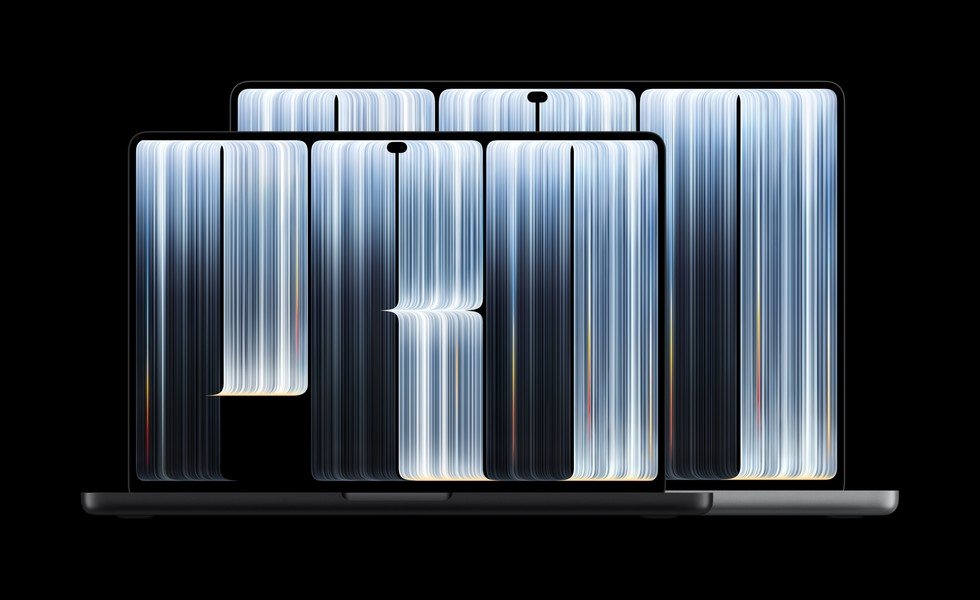
Apple unveiled its first touchscreen MacBook Pro on October 28, 2026, built around a new PROLED XDR OLED display with a built-in touch sensor. The 14-inch model starts at $2,899 and the 16-inch model starts at $3,399, with preorders open now and shipping from November 6, according to Apple’s own newsroom announcement.
The launch arrives a day after Apple introduced a separate, non-touch 14-inch MacBook Pro built on its M6 chip. That earlier model keeps the standard Liquid Retina XDR display and starts at $1,999, Apple said in a separate announcement on October 27. The PROLED XDR model announced this week instead uses M5 Pro or M5 Max chips and is positioned as the higher tier of the lineup.
Johny Srouji, Apple’s chief hardware officer, said in the newsroom release that “PROLED XDR is the world’s best laptop display.” It is the first time Apple has shipped touch input on a Mac notebook, a feature the company had resisted for more than a decade.
What does the PROLED XDR display actually change?
The PROLED XDR panel is a tandem OLED display available in 14.2-inch and 16.3-inch sizes, Apple’s newsroom post says. It reaches up to 2,000 nits of peak brightness in both HDR and SDR content, with a 10,000,000:1 contrast ratio and ProMotion adaptive refresh that scales from 10Hz to 120Hz.
The display covers the P3 and Adobe RGB color gamuts and adds an optional nano-texture cover glass for glare reduction. The built-in touch sensor is the headline change: Apple’s notebooks have never shipped with touch input, a decision the company’s co-founder Steve Jobs had argued against for Macs, unlike the touch-first iPad line.
Which chips and how much memory does it support?
The new MacBook Pro ships with Apple’s M5 Pro or M5 Max chips, not the M6 used in the smaller non-touch model announced a day earlier. Apple’s listing shows configurations with up to 128GB of unified memory and up to 16TB of storage.
Apple says the 16-inch model weighs 4 lb, about 0.7 lb lighter than the previous 16-inch MacBook Pro, while the 14-inch model weighs 3 lb. Battery life is rated at up to 24 hours under Apple’s own testing conditions from September 2026, with fast charging reaching 50 percent in roughly 30 minutes.
Connectivity includes three Thunderbolt 5 ports, HDMI, an SDXC card slot, MagSafe and a headphone jack, plus Wi-Fi 7, Bluetooth 6 and Touch ID. The M5 Pro configuration supports up to three external displays, while M5 Max supports up to four, per the newsroom release.
How much does each configuration cost?
Apple is selling four base configurations of the touchscreen MacBook Pro in the US, split across screen size and chip tier. Education pricing is lower across the board.
| Model | Standard price | Education price |
|---|---|---|
| 14-inch, M5 Pro | $2,899 | $2,749 |
| 16-inch, M5 Pro | $3,399 | $3,199 |
| 14-inch, M5 Max | $4,499 | $4,199 |
| 16-inch, M5 Max | $4,799 | $4,499 |
Apple’s announcement puts preorders live on October 28, with units reaching buyers from Friday, November 6. The machines run macOS 27 and include a 12-megapixel Center Stage camera and a six-speaker system Apple says has 50 percent deeper bass than before.
Has Apple tried touch input on a MacBook Pro before?
Apple’s closest previous attempt was the Touch Bar, a narrow touch-sensitive strip that replaced the function-key row on MacBook Pro models from 2016 until Apple discontinued it in 2023. The Touch Bar never extended touch input to the main display itself, and reception was mixed enough that Apple quietly dropped it from the lineup.
A full touchscreen on the main display is a different step. Apple’s iPad line has supported touch since 2010, but the company’s executives, including late co-founder Steve Jobs, had long argued that touch input made less sense on a notebook screen positioned upright and further from the user’s hand than a tablet lying flat.
What does this mean for buyers choosing between the two new MacBook Pro models?
Apple now sells two distinct 14-inch MacBook Pro lines at the same time: the M6 model announced October 27 starting at $1,999 without touch, and the PROLED XDR touch model announced October 28 starting at $2,899 with M5 Pro or M5 Max silicon. Buyers choosing the entry-level M6 option give up touch input and the OLED panel, while buyers who want the touchscreen pay a premium and step down to the M5 generation of chips rather than M6.
Apple has not said whether a touchscreen option will reach the standard M6 MacBook Pro line later. For now, touch input is exclusive to the higher-priced PROLED XDR configuration.
Leave a Reply