Cybersecurity firm Dragos says it found an AI router leak affecting at least three AI providers during a five month test, including on requests marked with a “zero data retention” flag that is supposed to stop any storage of the prompt or response. Dragos published the findings on November 19.
Dragos built a seeding system that embedded unique, trackable credentials, such as AWS keys, DNS names and URLs that no legitimate system would ever use, inside close to two million prompts sent to widely used AI services between July and November 2026. Any later use of one of those credentials meant someone inside the AI pipeline, not just the model the prompt was addressed to, had actually seen the content.
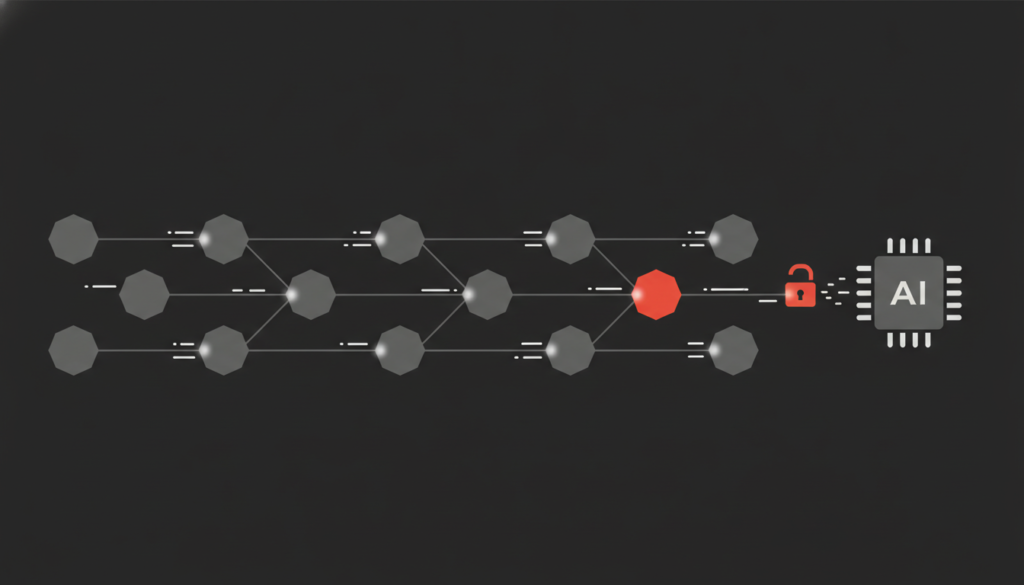
The company, in a post credited to chief research officer HD Moore, said it also traced roughly 2,000 hidden routing hops between the point a prompt was submitted and the model that answered it, using a technique similar to a network traceroute. Several hundred of those hops involved a system Dragos could not identify. OpenRouter, a routing service that forwards a request to one of many underlying AI models, turned up repeatedly in that tracing.
Dragos said it started the project using Thinkst Canarytokens, an existing open source tool for planting trackable alerts, before building its own dedicated seeding service once the scale of the test grew. That service’s tracking endpoints covered DNS lookups, web page visits, git repository access, SSH logins, database connections and email, with every triggered alert tied back to the exact prompt, model, routing path and privacy setting that had been used to send it.
What the test found
Dragos said data from at least three AI providers was exposed during the test. In the largest single breach, a couple hundred of the firm’s planted AWS keys were stolen and then used to make tens of thousands of API calls against Dragos’s own controlled cloud accounts.
In a separate case, Dragos said one AI lab based in China retrieved the secret tracking links embedded in more than half of all the prompts it received between July and October. Dragos is working with roughly a dozen affected providers on coordinated disclosure of the issues, according to the same post.
Why “zero data retention” did not stop the leaks
Zero data retention, or ZDR, is a setting many AI providers and routers offer that is meant to guarantee a prompt and its response are never stored once the model has answered. Dragos found that in two of its three confirmed breaches, some of the leaked requests had actually been marked ZDR at the time they were sent.
For the Chinese lab’s traffic specifically, Dragos said about two thirds of the requests marked “no data collection” or ZDR were still accessed on the other end. In one case, a secret link planted inside a prompt sent through a United States based provider, with the ZDR flag set, turned up in a work chat on the Chinese platform Feishu 24 days after it was first submitted.
“Zero Data Retention is supposed to mean something,” Moore said in the post.
What it means for businesses using AI routers
AI routers exist to let a business send one request and have it forwarded automatically to whichever underlying model fits the job, often across several hops and providers it never directly chose. Dragos’s findings suggest that a privacy setting applied at the first hop does not necessarily bind every provider further down that chain, especially when a request changes hands between companies with different data practices.
For a company sending confidential business data, source code or customer records through one of these routed services, the practical risk is that a ZDR label on the dashboard may not reflect what actually happens to the data once it leaves the first provider’s own systems.
Dragos has not named the three breached providers publicly, saying disclosure with the affected companies is still in progress.
Watch for whether any of the roughly dozen providers Dragos is working with name themselves, and whether router operators such as OpenRouter publish changes to how they audit which downstream providers actually honor a ZDR flag.
Frequently asked questions
What is an AI router?
An AI router is a service that sits between a business and the AI models it wants to use, forwarding each request to whichever underlying model fits the task, sometimes switching providers automatically to manage cost or availability. OpenRouter is one widely used example.
What does zero data retention actually promise?
A provider offering zero data retention commits to not storing a prompt or its response once it has been processed. Dragos’s test found that commitment did not always hold once a request passed through additional, unnamed hops in a routed path.
What should companies sending sensitive data through AI routers do?
Dragos has not published a formal remediation checklist. Its post argues, through Moore’s framing, that a ZDR label describes only one provider’s own policy, not every hop a request may pass through on a routed path.



Leave a Reply